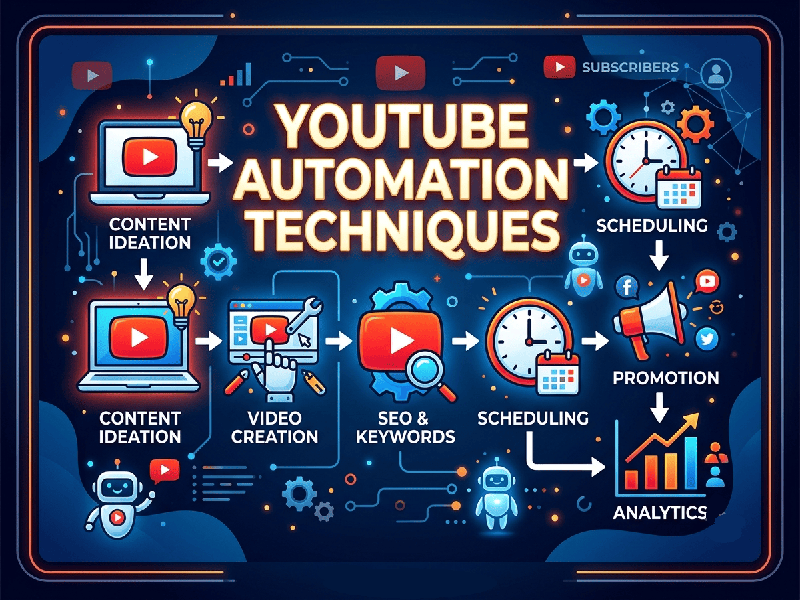
YouTube Automation Techniques
YouTube Automation Techniques encompass software workflows,
AI-assisted tools, and outsourced operational models used to stream content
creation, publishing, optimization, and audience management. Whether applied to
"faceless" channels or standard creator workflows, automation
minimizes manual overhead across research, video production, metadata
management, and post-launch engagement.
Key Automation Pillars & Workflow Applications
- Topic Discovery & Scripting
Automation:
LLMs and SEO intelligence platforms analyze search
trends, competitor video performance, and audience retention metrics to
generate targeted script outlines, hooks, and full narration drafts
automatically.
- Automated Voice Synthesis &
Video Editing:
Generative AI voice models convert text scripts into
lifelike voiceovers, while programmatic editing suites auto-generate captions,
b-roll overlays, transition effects, and short-form cutouts (YouTube Shorts)
from long-form content.
- SEO & Metadata Optimization:
Automated toolsets generate high-CTR titles, optimized
descriptions, relevant tag clusters, and dynamic video thumbnails via AI design
models.
- API-Driven Publishing &
Social Cross-Posting:
Automated scheduling pipelines push rendered videos
directly via the YouTube Data API while simultaneously distributing promo
snippets across social platforms using integration platforms like Make, n8n, or
Zapier.
- Community Management &
Analytics Monitoring:
NLP chatbots automatically filter spam, highlight
high-priority viewer comments, and send automated alerts if retention or CTR
drops below target benchmarks.
1.Keyword Research & Trend Ingestion:Identify high-demand, low-competition
content angles.
Use automated trend monitoring and YouTube API tools
to identify viral hooks, search volume spikes, and content gaps in your chosen
niche.
2.AI Scripting & Voice Synthesis:Structure high-retention hooks and
outlines.
Pass top-performing topic parameters into generative
models to write structured scripts, then generate natural voice tracks using
advanced text-to-speech engines.
3.Automated Rendering & Thumbnail Generation:Assemble visual and audio layers
programmatically.
Combine voice tracks, stock footage, automated closed
captions, and background music through cloud rendering pipelines, paired with
AI-designed thumbnails.
4.API Publishing & Cross-Platform Distribution:Schedule publication and syndicate
across channels.
Upload the final video package automatically using
scheduling tools, triggering webhooks that format and publish short clips
across TikTok, Instagram Reels, and YouTube Shorts.