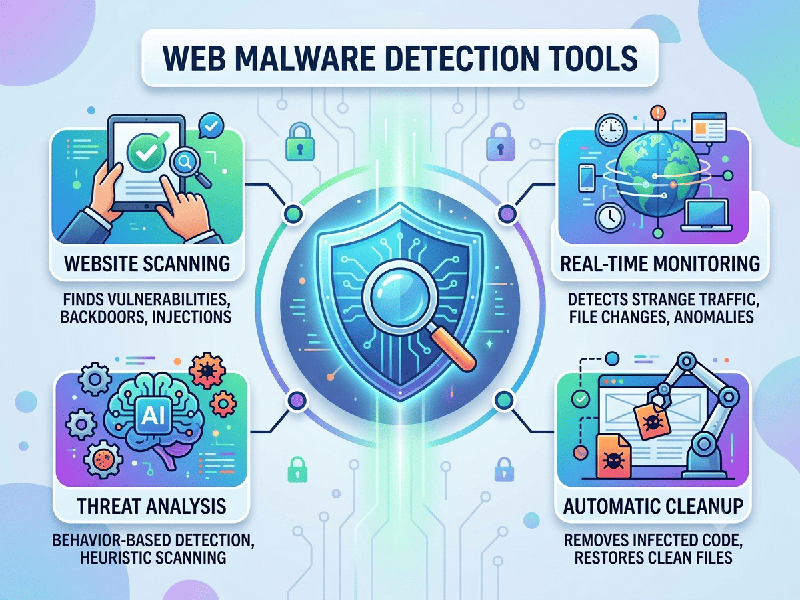
Web Malware Detection Tools
Web malware detection tools scan websites, web
applications, and server files to identify malicious scripts, hidden backdoors,
cryptominers, and vulnerabilities. These tools range from quick, free remote
URL scanners to comprehensive, automated server-level security platforms.
Top Web Malware Detection Tools
1. Sucuri SiteCheck A widely used free remote scanner that checks any URL
for known malware, defacements, and out-of-date CMS versions (like WordPress or
Joomla). It cross-references your site against major blocklists (Google Safe
Browsing, McAfee, PhishTank) to ensure your domain hasn't been flagged.
2. VirusTotal A free aggregator tool that analyzes files, domains, IPs,
and URLs against over 70 third-party antivirus scanners and URL blocklisting
services. It is best used for quickly verifying if a specific URL or downloaded
file contains known threats.
3. ScanTower A specialized tool designed to detect malicious JavaScript
and e-commerce threats. It focuses on identifying Magecart attacks (card
skimming scripts), keyloggers, and data exfiltration attempts that steal
customer payment information from checkout forms.
4. Astra Security A robust, multipurpose security platform offering
both free public source-code scanning and a paid, feature-rich version. The
paid version accesses internal files and folders to flag phishing scripts,
background cryptocurrency miners, and malware-infected external dependencies.
5. Quttera A thorough scanner tailored for popular CMS platforms like
WordPress, Drupal, and SharePoint. It provides in-depth reports detailing your
site's blacklist status, potentially harmful external links, and the presence
of malicious iframes.
6. Malcure WebScan A free online scanner that inspects the public-facing
HTML and JavaScript of a website for redirects and obfuscated code. It is often
paired with their dedicated WordPress plugin to scan deeper server-side PHP
files and database infections.
7. SiteGuarding A cloud-based scanner that crawls websites to spot
backdoors, local and external malicious JavaScript files, and spam injections.
It maintains an up-to-date database to detect newly emerging malware strains.