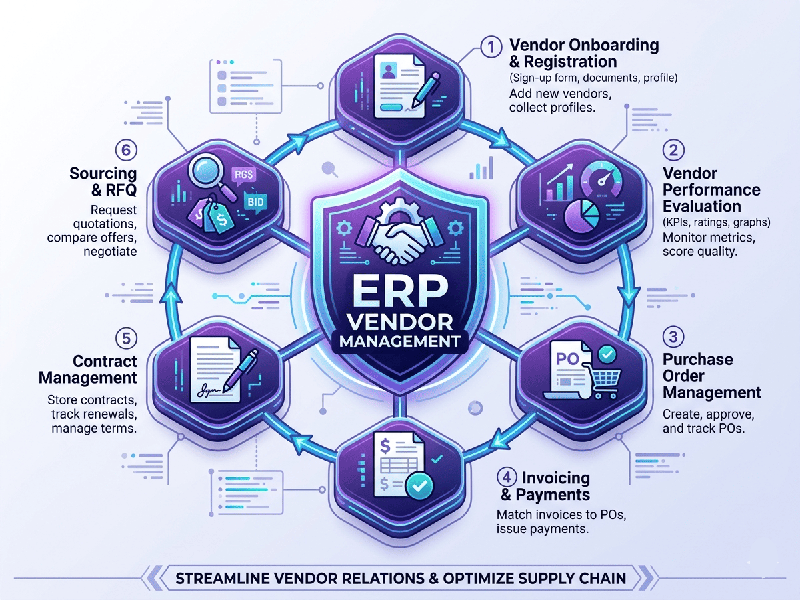
Vendor Management in ERP Systems
Vendor management within an Enterprise Resource Planning
(ERP) system is the centralized process of managing an organization’s
interactions with its suppliers. By integrating vendor data into a single
source of truth, businesses can streamline procurement, reduce risks, and
improve financial transparency.
Key Modules of Vendor Management
A robust ERP handles the entire lifecycle of a vendor
relationship through several interconnected phases:
- Vendor Onboarding & Profile
Management:
Centralizing contact details, tax IDs, certifications, and compliance
documents. This ensures that every department is working with authorized,
vetted suppliers.
- Sourcing & Procurement: Automating the creation of
Purchase Requisitions (PR) and Purchase Orders (PO). The system tracks
prices against negotiated contracts to prevent "maverick
spending."
- Performance Tracking: Using real-time data to grade
vendors on Key Performance Indicators (KPIs) like on-time delivery rates,
product quality, and lead-time accuracy.
- Accounts Payable (AP)
Automation:
Matching invoices against POs and goods receipts (Three-Way Matching) to
ensure payments are only made for what was actually received.
The "Three-Way Match" Process
One of the most critical security features in ERP vendor
management is the Three-Way Match. This process cross-references three
documents before a payment is authorized:
1.
The Purchase Order (PO): What was ordered.
2.
The Goods Receipt Note (GRN): What was delivered.
3.
The Supplier Invoice: What the vendor is charging.
If the quantities or prices do not align across these three
documents, the ERP system automatically flags the discrepancy for review,
preventing overpayment or fraud.