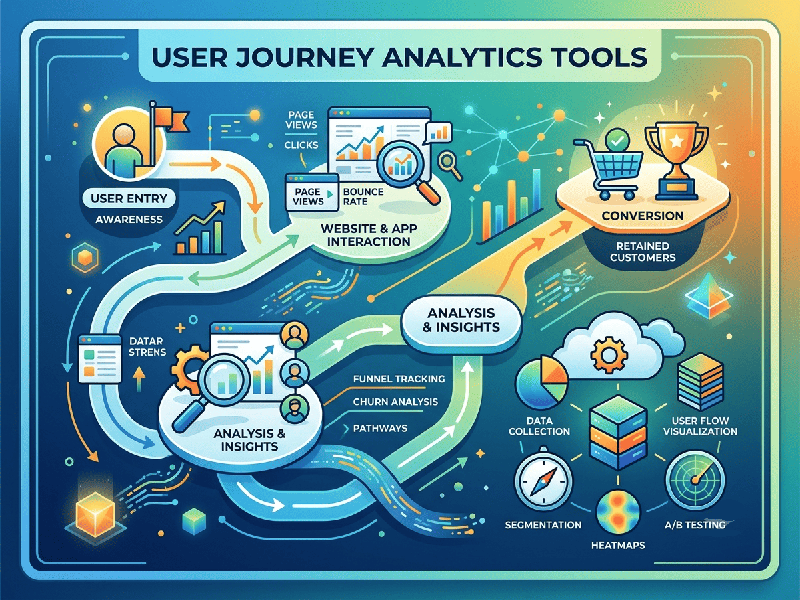
User Journey Analytics Tools
User journey analytics tools are software platforms
designed to track, visualize, and analyze how users interact with your digital
product (website or app) from their first touchpoint to conversion and
retention. By bridging the gap between raw data and human behavior, these tools
help teams identify friction, optimize conversion funnels, and improve the
overall customer experience.
Understanding the Two Types of Tools
It is important to distinguish between Analytics
tools and Mapping tools, as they are often used together but serve
different purposes:
- User Journey Analytics Tools: Provide the quantitative
data and actual behavioral paths. They tell you what is
happening (e.g., "30% of users drop off at this specific checkout
step").
- User Journey Mapping Tools: Provide the qualitative
framework to design and visualize the intended or ideal
experience. They often include empathy maps, emotional highs/lows, and
team collaboration features.
Key Features to Look For
When evaluating these tools, prioritize those that
offer:
- Path Analysis: The ability to visualize the
actual, often non-linear sequences of actions users take.
- Funnel Optimization: Tracking specific steps in a
process (e.g., signup flow) to identify where users abandon the journey.
- Session Replay: Watching recorded user sessions
to see exactly where they got stuck, confused, or frustrated.
- Cross-Channel/Device Tracking: A holistic view of users as
they move from mobile to desktop or across marketing channels.
- Data Autocapture: Minimizing the manual tagging
of every event by automatically capturing user interactions.
- Collaboration/Governance: For larger teams, the ability
to share, document, and standardize journey maps is vital.
Why Teams Use These Tools
1.
Reduce Churn:
By finding the exact moments where users become confused or dissatisfied.
2.
Optimize Conversions: By refining the "happy path" to remove unnecessary friction in
signup or checkout flows.
3.
Proactive Roadmapping: Shifting from guessing what users need to building features
based on evidence of where they struggle.
4.
Empathy Building: Moving beyond aggregate numbers to understand the actual, human-centric
struggle of using your product.