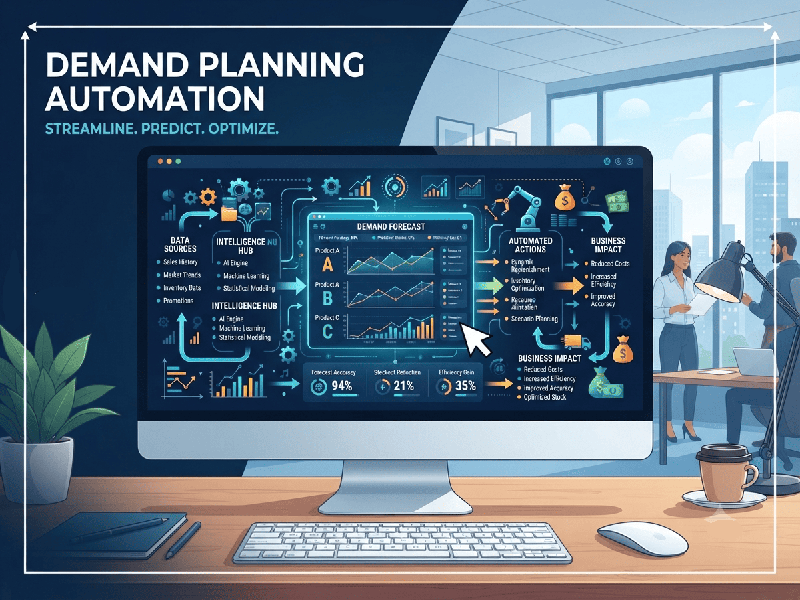
Demand Planning Automation
Demand planning automation refers to the use of
advanced technology—such as AI, machine learning, and real-time data
integration—to streamline and enhance the process of predicting future customer
demand.
For an organic food firm like Agrived Foods,
where products often have short shelf lives and are sensitive to seasonal
fluctuations, automation serves as a critical tool to balance supply and demand
while minimizing waste.
Key Benefits for the Organic Food Industry
- Reduced Food Waste: By accurately aligning
procurement and production with real-time demand, you can significantly
minimize the risk of inventory spoilage and expired products.
- Enhanced Traceability: Automated systems often provide
"farm-to-fork" tracking, which is essential for maintaining the
quality standards and authenticity expected in the organic food sector.
- Improved Efficiency: Automation reduces the manual
effort required for data entry and spreadsheet management, allowing your
team to focus on strategic decision-making and supplier relationships.
- Agility in Volatility: Automated tools can adjust to
seasonal trends, weather patterns, or sudden market shifts far faster than
traditional manual methods, ensuring you have the right stock at the right
time.
Implementation Considerations
- Data Quality: Automation is only as good as
the data it receives. Ensure your internal data (sales history, inventory
records) is clean and standardized before integration.
- Scalability: Choose platforms that allow for
"no-code" or "low-code" configurations, which can help
your team adapt processes as Agrived Foods grows without needing extensive
IT support.
- Cultural Shift: Shift your team’s focus from
manual data collection to managing insights and exceptions—this is key to
maximizing the ROI of your automated systems.