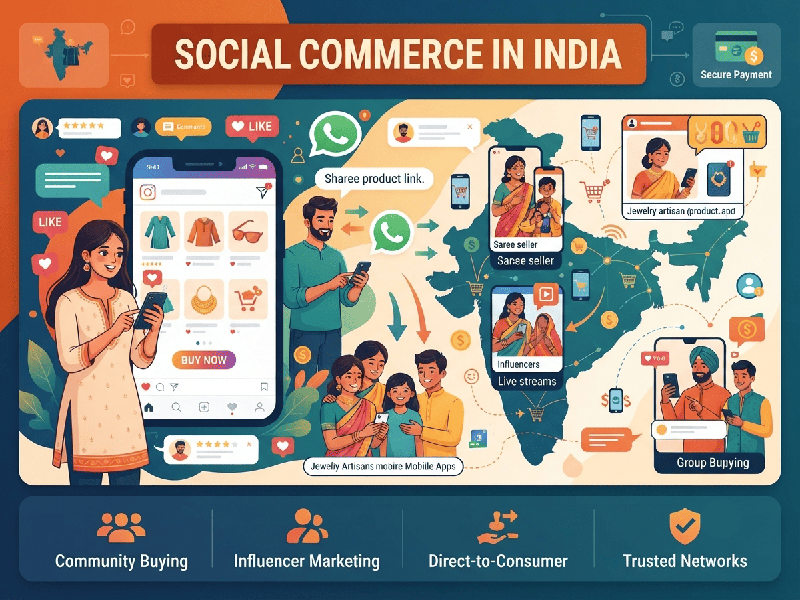
Social Commerce in India
The social commerce landscape in India is undergoing a
structural transformation, evolving from informal, community-led transactions
into a sophisticated, regulated, and technology-driven ecosystem. As of 2026,
it has become a primary driver of digital adoption, particularly in Tier II,
III, and IV cities.
Market Status (2026)
- Rapid Expansion: The market is experiencing
robust growth, with projections placing it as a vital component of India’s
retail future.
- The "Bharat" Surge: Adoption is heavily fueled by
non-metropolitan consumers who rely on vernacular language interfaces,
audio/video content, and community-based selling.
- Messaging-Led Commerce: A significant shift is
occurring toward "conversational commerce." Platforms like
WhatsApp are moving beyond simple lead generation to become end-to-end
shopping hubs—handling discovery, assisted selling, personalized offers,
and post-purchase service.
Key Growth Drivers
- Digital Infrastructure: India’s UPI ecosystem and
widespread, low-cost internet access have created a
"zero-friction" payment environment that underpins social
commerce transactions.
- Immersive Shopping: The integration of live-stream
selling and shoppable short-form videos is bridging the gap between
entertainment and shopping.
- Trust & Personalization: Unlike traditional e-commerce,
social commerce leverages peer recommendations, nano-influencers, and
community leaders to build the trust necessary for first-time online
shoppers.
- Assisted Selling: In categories where consumers
require guidance, social commerce allows for a high-touch, human-like
shopping experience that mimics traditional retail relationships.
Opportunities for Businesses
- Lower Entry Barriers: Small and medium-sized
enterprises (SMEs) can reach a nationwide audience with minimal upfront
investment compared to traditional retail or standalone e-commerce sites.
- Enhanced Engagement: Brands can utilize AI-driven
conversational agents to provide 24/7 support, turning social comments
into high-intent sales threads.
- Community Building: Leveraging user-generated
content (UGC) and community groups (like "bulk buying" circles)
fosters brand loyalty that is often more durable than traditional
advertising-led acquisition.
Challenges & Evolving Regulations
- Increased Regulation: The sector is moving toward a
more disciplined environment. Regulators (such as the Bureau of Indian
Standards) and bodies like ASCI are enforcing stricter rules on influencer
disclosures, seller vetting, and product safety to protect consumers.
- Data & Discoverability: While social commerce offers
reach, brands often have less control over consumer data compared to their
own websites. Additionally, finding specific products via keyword search
on social platforms remains less efficient than on dedicated e-commerce
marketplaces.
- Operational Complexity: As businesses scale, managing
inventory across multiple social storefronts (Instagram, WhatsApp, etc.)
and synchronizing them with physical stock requires robust unified
management tools.