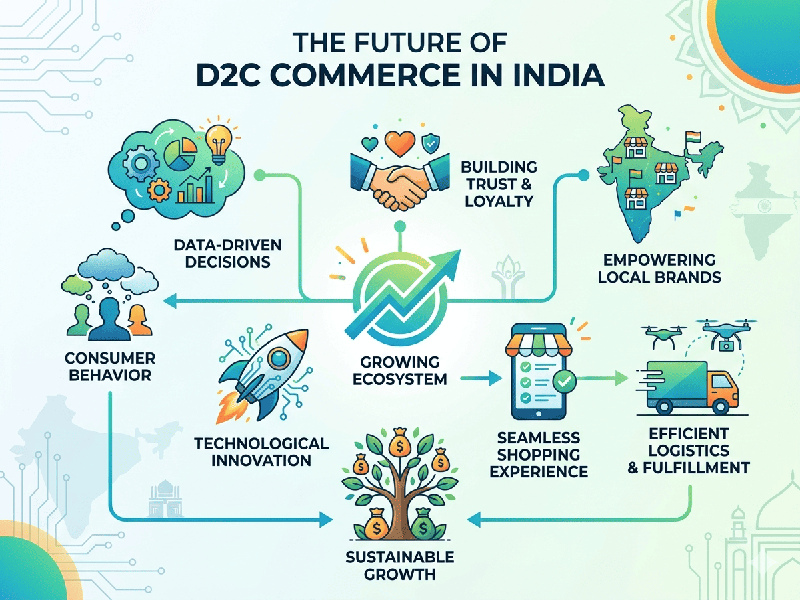
The Future of D2C Commerce in India
The Direct-to-Consumer (D2C) landscape in India is
transitioning from an era of rapid, hyper-funded experimentation into a mature,
multi-billion-dollar industry. Currently valued at over $108.76 billion,
the Indian D2C market is projected to reach an impressive $322.1 billion by
2031, growing at a compounding annual rate (CAGR) of 24.3%.
This evolution is fundamentally shifting how brands scale,
survive, and build relationships with Indian consumers.
1. The Core Macro Shifts Driving the Boom
The expansion of D2C is no longer limited to tech-savvy
metros. Several key factors are driving this massive nationwide evolution:
- The Rise of Tier-2 and Tier-3
Consumers:
Smartphone penetration in smaller cities and towns has crossed 78%,
unlocking more than 150 million new digital shoppers. Over 50% of the
Gross Merchandise Value (GMV) for mass digital platforms now stems from
non-metro areas, making regional and vernacular targeting essential.
- The ONDC Infrastructure
Catalyst: The
government-backed Open Network for Digital Commerce (ONDC) is lowering the
entry barrier. It allows niche and emerging local brands to plug directly
into a shared national logistics and discovery network without paying high
commission cuts to dominant third-party marketplaces.
- The Shift to Sustainable, Native
Brands: Gen-Z
and millennial cohorts are increasingly bypassing legacy FMCG companies in
favor of values-driven, transparent, and home-grown
"Made-in-India" labels that specialize in niche categories like
clean beauty, organic food, and specialized wellness.
2. The 2026 Strategy: The "Omnichannel or Die"
Reality
For a long time, D2C meant "digital-only." Today,
high Customer Acquisition Costs (CAC) on platforms like Meta and Google have
made digital ad-spend highly inefficient as a sole source of growth.
The New Standard: Successful D2C brands are transitioning to an integrated Omnichannel
Model. Modern digital-first brands like Plum, Mamaearth, and boAt are
aggressively opening exclusive physical outlets, setting up kiosks in
high-footfall malls, and partnering with modern trade distribution networks.
This hybrid approach solves a distinct Indian retail
challenge: it lets first-time, cautious buyers "touch and feel" the
products, building immediate brand trust while significantly lowering long-term
CAC.
3. Operational & Technology Enablers
To manage thin contribution margins and highly complex supply
chains, Indian D2C companies are adopting a strict "tech-first"
operational framework:
- Automated Courier Aggregation: Tools that pool multiple
logistics partners automatically select the fastest, lowest-cost carrier
for a specific pin code. This lowers shipping overheads and reduces
delivery friction across India’s vast geography.
- Fintech & Working Capital
Management: Managing
Cash-on-Delivery (COD) returns remains a major challenge. Integrated tech
platforms are optimizing returns reconciliation, while revenue-based
lenders step in to bridge capital gaps created by delayed COD cycles.
- Hyper-Personalization via
First-Party Data: By owning their digital storefronts, brands gather rich first-party
data. They rely heavily on automated WhatsApp and SMS CRM tools to boost
customer retention and push post-purchase loyalty loops, which are
significantly more profitable than chasing raw user acquisition.