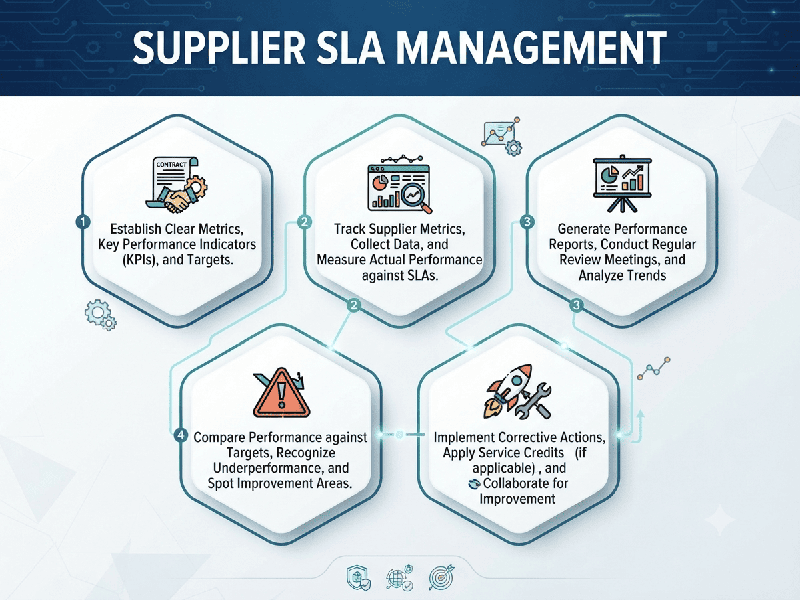
Supplier SLA Management
Managing Service Level Agreements (SLAs) with
suppliers is critical for maintaining operational continuity, protecting profit
margins, and ensuring consistent product quality. In sectors like organic food
and perishable logistics, supplier SLAs require a specialized approach to
account for seasonality, strict quality thresholds, and supply chain
volatility.
Core Components of an Effective Supplier SLA
To ensure suppliers consistently meet operational
expectations, a robust SLA should explicitly define the following parameters:
- Key Performance Indicators
(KPIs):
Quantifiable metrics used to evaluate supplier performance, such as
On-Time In-Full (OTIF) delivery rates, order accuracy, and lead time
adherence.
- Quality Thresholds: Strict specifications regarding
product standards, acceptable defect rates, rejection procedures, and
mandatory certifications (e.g., organic compliance, food safety audits).
- Reporting & Governance: Clear guidelines on how and
when performance data is shared, including weekly check-ins, monthly
scorecard reviews, and quarterly business reviews (QBRs).
- Corrective Action Plans (CAPA): A structured framework
detailing the steps, responsibilities, and timelines required when a
supplier fails to meet agreed-upon performance standards.
Key Strategies for Managing and Optimizing SLAs
1. Factor in Seasonal Variability and Market Realities
Rigid, year-round performance benchmarks often fail
when dealing with agricultural yields or seasonal raw materials.
- Flexible Thresholds: Build seasonal flexibility into
delivery times and volume tolerances to account for weather events,
harvest fluctuations, and natural supply constraints.
- Realistic Lead Times: Collaborate with suppliers to
establish achievable lead times rather than forcing aggressive turnaround
windows that encourage corners to be cut on quality.
2. Implement Real-Time Tracking and Transparency
- Demand-Driven Alignment: Transition away from rigid,
static forecasts by sharing near-real-time demand signals with key
suppliers so they can plan procurement and capacity more effectively.
- Automated Monitoring: Use digital dashboards and IoT
sensors to track transit conditions, inventory levels, and delivery
milestones dynamically, reducing reliance on manual reporting.
3. Establish Clear Incentives and Consequences
- Bonus/Penalty Structures: Tie financial incentives (such
as early payment discounts or preferred volume allocations) to exceeding
SLA targets, while outlining clear penalties or chargebacks for chronic
underperformance.
- Progressive Enforcement: Utilize a tiered escalation
process—starting with collaborative problem-solving sessions and moving
toward volume reductions or contract termination if performance does not
improve.