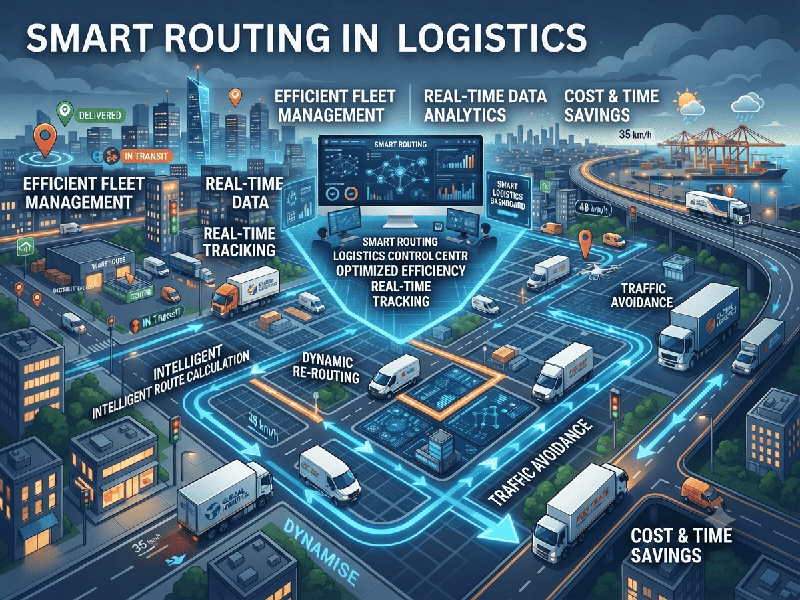
Smart Routing in Logistics
"Smart routing" in logistics is a dynamic,
data-driven approach that moves beyond static, rule-based planning to real-time,
adaptive optimization of delivery and transport paths.
In 2026, it is no longer just about finding the
"shortest" distance; it is about balancing multiple constraints—such
as traffic, fuel costs, vehicle capacity, and delivery windows—using artificial
intelligence.
Core Components of Smart Routing
- AI & Machine Learning: Modern systems ingest vast
datasets (historical traffic, weather, driver behavior, and vehicle
health) to predict disruptions and automatically suggest optimal routes.
- Dynamic Decision-Making: Unlike manual or static
planning, smart routing systems can recalculate paths in real time if a
road is blocked or an order is added/cancelled, ensuring agility.
- Predictive Analytics: By analyzing past performance
and current trends, these systems can forecast bottlenecks and adjust
schedules proactively rather than reacting after a delay occurs.
- IoT & Telematics
Integration:
Real-time data from GPS and vehicle sensors (like temperature for
cold-chain) is fed into the system to monitor shipments and driver
performance continuously.
Key Benefits
- Operational Efficiency: Significant reductions in fuel
consumption, idle miles, and vehicle wear and tear.
- Improved Customer Experience: Provides accurate ETAs and
transparency, which builds trust and reduces support inquiries.
- Sustainability: By optimizing routes and
reducing unnecessary travel, companies can lower their carbon footprint,
meeting both environmental targets and consumer expectations.
- Scalability: Automated systems allow
logistics networks to handle higher volumes of orders without requiring
proportional increases in dispatch staff.
Considerations for Indian Exporters
For businesses like Agrived Foods, or those navigating
the Indian logistics landscape, smart routing must be applied with a
"holistic approach". While technology is powerful, it must account
for local realities:
- Infrastructure Variability: In India, the
"fastest" route on a map may be unreliable due to road
conditions, rural-urban disparities, or seasonal issues like monsoon
flooding.
- Operational Resilience: Smart routing alone isn't
enough; it must be paired with operational levers like proactive
container inspection (e.g., checking floor integrity/moisture before
loading for monsoon season) and pre-booking port/yard space during
peak congestion.
- Integrated Systems: Effective routing requires
integrating your routing software with your TMS (Transportation Management
System), ERP, and warehouse operations to ensure end-to-end visibility.
Common Routing Software & Tools
- For Enterprise: Platforms like Locus, FarEye,
LogiNext, and Shipsy are widely used for end-to-end
logistics orchestration, carrier management, and dynamic rerouting.
- For Global/Maritime: Tools like Descartes
provide strong support for regulatory compliance and complex cross-border
logistics.