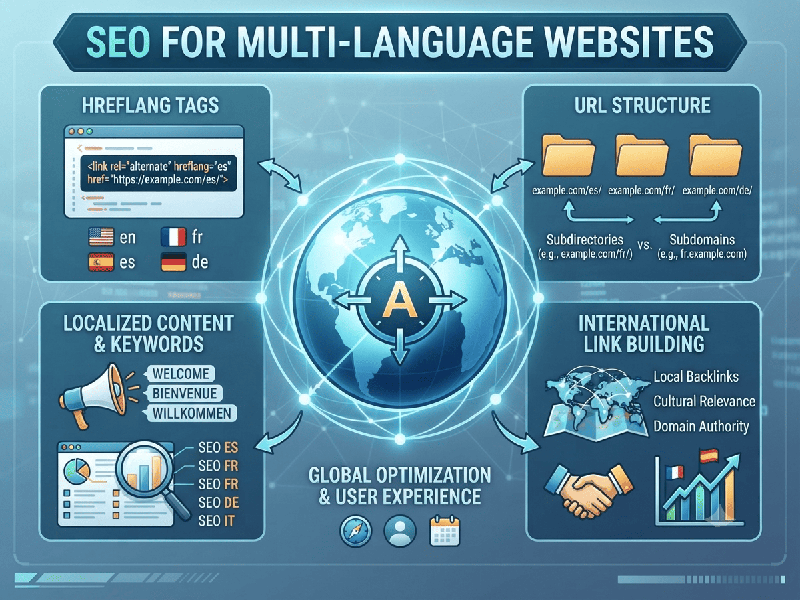
SEO for Multi-Language Websites
Multilingual SEO is the process of optimizing your website so that
search engines can easily understand your language variations and serve the
correct pages to users around the world in their native language.
A successful multi-language SEO strategy relies on
four core pillars: URL Architecture, Technical Implementation (Hreflang),
Content Localization, and Off-Page Authority.
1. Choose the Right URL Structure
Your site architecture tells search engines how your
language versions are organized. There are three primary structures, each with
distinct pros and cons:
- ccTLDs (Country Code Top-Level
Domains):
example.fr, example.de
o Pros: Strongest geographical signal;
highly trusted by local users.
o Cons: Expensive to maintain; builds
authority from scratch for each domain.
Pros: Recommended for most businesses.
Passes link equity/authority from the main domain to all language folders; easy
to manage.
- Subdomains: fr.example.com, de.example.com
o Pros: Easy to set up on different servers.
o Cons: Search engines may treat subdomains
as somewhat independent entities, making it harder to pass domain authority.
3. Localize Content (Don't Just Translate)
Word-for-word automated translations often fail
because they ignore cultural nuances, search intent, and local phrasing.
- Localized Keyword Research: People in different regions
search differently. For example, Americans might search for
"sneakers," while British users search for "trainers."
Conduct keyword research natively for each target market.
- Translate "Invisible"
Elements:
Ensure your metadata is fully optimized:
o Title tags and Meta descriptions (in
the target language)
- Format Localization: Adapt currencies, units of
measurement (metric vs. imperial), and date formats to match regional
expectations.
4. Provide Seamless UX & Language Switchers
- Clear Language Selector: Use recognizable flags or
native text (e.g., "Español" instead of just "ES") for
language switching. Avoid forcing auto-redirects based solely on IP
addresses; instead, let users choose and remember their preference via
cookies or browser settings.
Mobile Friendliness: Ensure fast loading speeds and responsive design universally, as international audiences often access sites via varying mobile networks and devices.