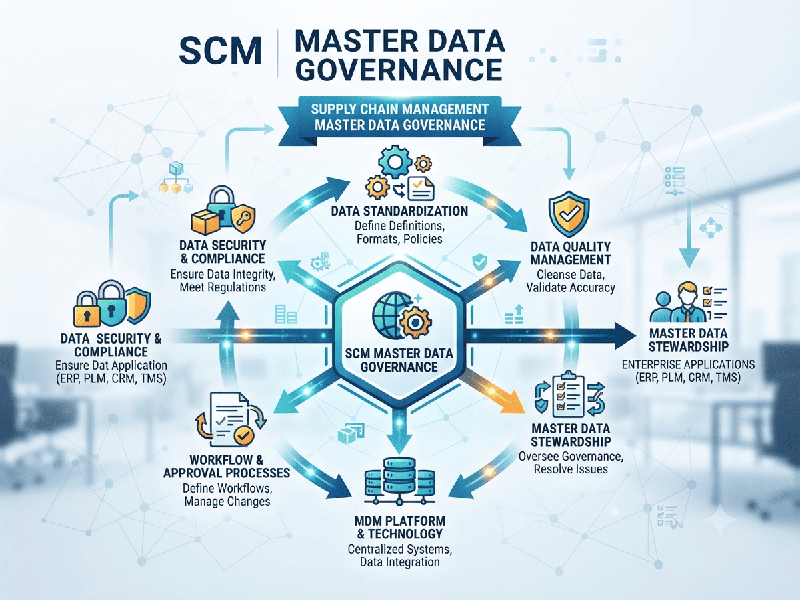
SCM Master Data Governance
Supply Chain Management (SCM) Master Data Governance
(MDG) is the foundational framework of policies, processes, and technologies
used to maintain the accuracy, consistency, and security of core supply chain
data. Across complex supply networks—from material procurement and inventory
tracking to manufacturing and international logistics—inaccurate master data
causes costly errors, shipping delays, and inventory discrepancies.
Core Domains of SCM Master Data
To maintain a reliable supply chain, governance
frameworks must actively manage four primary data domains:
- Material/Product Master: Specifications, dimensions,
weight, SKU numbers, hazard classifications, unit of measure conversions,
and regulatory/organic certifications.
- Vendor/Supplier Master: Corporate details, compliance
records, bank accounts, approved shipping locations, lead times, and
performance scorecards.
- Customer/Client Master: Delivery addresses, preferred
communication channels, billing details, credit limits, and specialized
handling requirements.
- Location/Warehouse Master: Facility identifiers, storage
zones, bin capacities, geolocations, and operational hours.
Key Challenges of Poor Master Data Governance
- Inventory Inaccuracies: Discrepancies between system
records and physical stock lead to stockouts, overstocking, and emergency
shipping costs.
- Procurement and Billing Errors: Mismatched part numbers or
vendor pricing create invoice exceptions, delaying payments and straining
supplier relationships.
- Logistical Inefficiencies: Incorrect package dimensions or
weight data result in miscalculated freight costs, carrier rejections, or
customs clearance delays during international trade.
Best Practices for Implementing SCM Master Data
Governance
1. Establish a Centralized Single Source of Truth
(SSOT)
- ERP/MDM Integration: Consolidate master data within
a centralized Enterprise Resource Planning (ERP) or Master Data Management
(MDM) platform to eliminate isolated data silos between procurement,
warehousing, and sales.
- Standardized Naming Conventions: Enforce strict, uniform
taxonomy rules across all departments (e.g., standardized descriptions for
raw materials, packaging, and finished goods).
2. Define Clear Data Stewardship and Workflows
- Role-Based Access Control
(RBAC): Assign
specific data stewards responsible for creating, modifying, and approving
records within their domain (e.g., procurement teams manage vendor data;
warehouse managers handle location data).
- Multi-Step Approval Workflows: Implement mandatory review
workflows for critical changes—such as modifying supplier bank details or
updating core product specifications—to prevent fraudulent activities or
accidental data corruption.
3. Continuous Data Quality Monitoring
- Automated Validation Rules: Build system constraints that
prevent the creation of incomplete records (e.g., blocking a product SKU
creation if weight or compliance certifications are missing).
- Regular Data Audits: Schedule periodic data
cleansing cycles and exception reporting to identify duplicate records,
obsolete SKUs, or inactive vendor profiles.