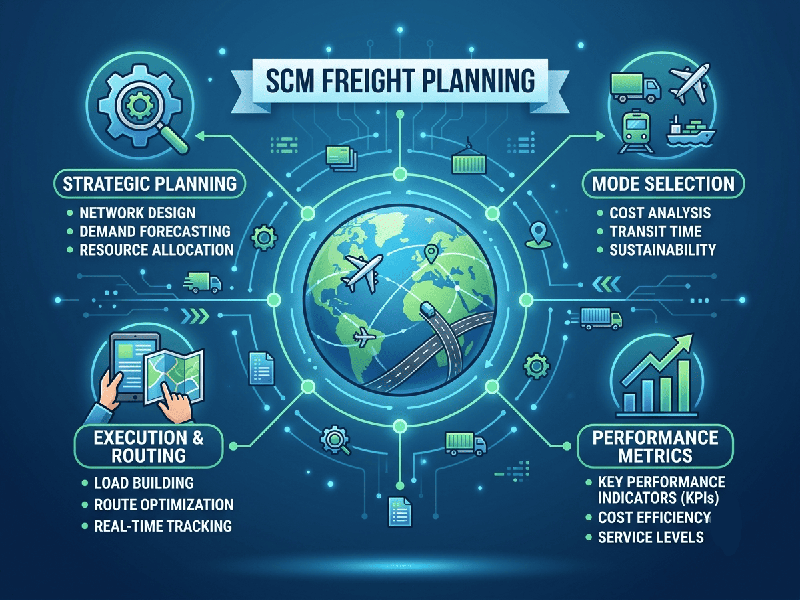
SCM Freight Planning
Freight planning is the strategic process of
organizing, optimizing, and executing the movement of goods from origin to
destination across a supply chain network. Effective freight planning minimizes
shipping costs, reduces transit times, and enhances carrier performance while
consistently meeting customer delivery expectations.
Core Components of Freight Planning
- Modal Selection: Choosing the most efficient
transportation mode (ocean, air, rail, full truckload, or
less-than-truckload) based on cargo volume, urgency, and cost trade-offs.
- Consolidation & Load
Building:
Grouping smaller shipments into full loads and applying smart
palletization strategies to maximize container space and lower per-unit
freight costs.
- Carrier Management: Establishing contracts,
monitoring service level agreements, and allocating freight volumes across
a dependable network of logistics providers.
Key Best Practices for Optimization
- Dynamic Route Optimization: Utilizing advanced routing
software to calculate efficient delivery paths while factoring in fuel
prices, tolls, weather, and traffic conditions.
- Incoterms & Documentation
Alignment:
Aligning international shipments with correct Incoterms, bills of lading,
and customs compliance paperwork to prevent border bottlenecks.
- Real-Time Visibility: Integrating IoT tracking and
telematics to monitor shipments in transit and proactively manage
potential route disruptions.
Emerging Trends & Sustainability
- Carbon Footprint Tracking: Measuring and reporting
greenhouse gas emissions across transportation lanes to satisfy modern
regulatory standards and corporate sustainability goals.
- Predictive Risk Analytics: Leveraging historical data and
predictive modeling to forecast port congestion, seasonal rate spikes, and
weather-related supply chain vulnerabilities.