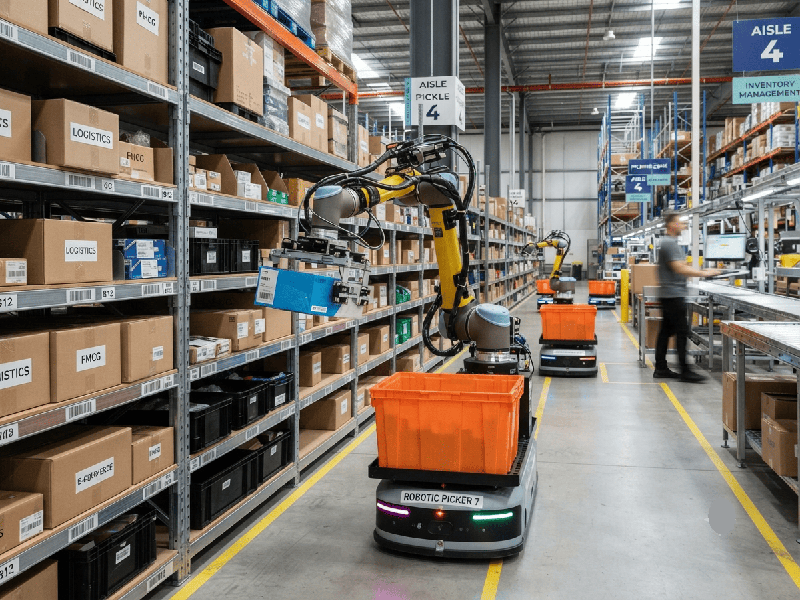
Robotic Picking Systems in Warehousing
Robotic picking systems represent a transformative shift in
warehouse operations, moving from manual, labor-intensive tasks to highly
automated, data-driven processes. These systems utilize advanced robotics—such
as robotic arms, autonomous mobile robots (AMRs), and goods-to-person (GTP)
technology—to identify, grasp, and transport items with extreme speed and
precision.
How They Function
Modern robotic picking systems are deeply integrated
with a warehouse’s digital infrastructure. The process typically involves
several key layers:
- Software Orchestration: Warehouse Management Systems
(WMS) and Warehouse Control Systems (WCS) send real-time instructions to
robots, optimizing routes and managing inventory allocation.
- Perception & Vision: Robots are equipped with
computer vision, cameras, and sensors (like LiDAR) that allow them to
"see" and identify products, calculate dimensions, and navigate
environments without fixed tracks.
- Adaptive Manipulation: Using AI and machine learning,
robots can determine the optimal grip for items of varying weights,
textures, and shapes.
- Task Execution: Whether it is a robotic arm
picking an individual item from a bin or an AMR transporting goods to a
packing station, these robots operate continuously, often 24/7, to
maintain consistent throughput.