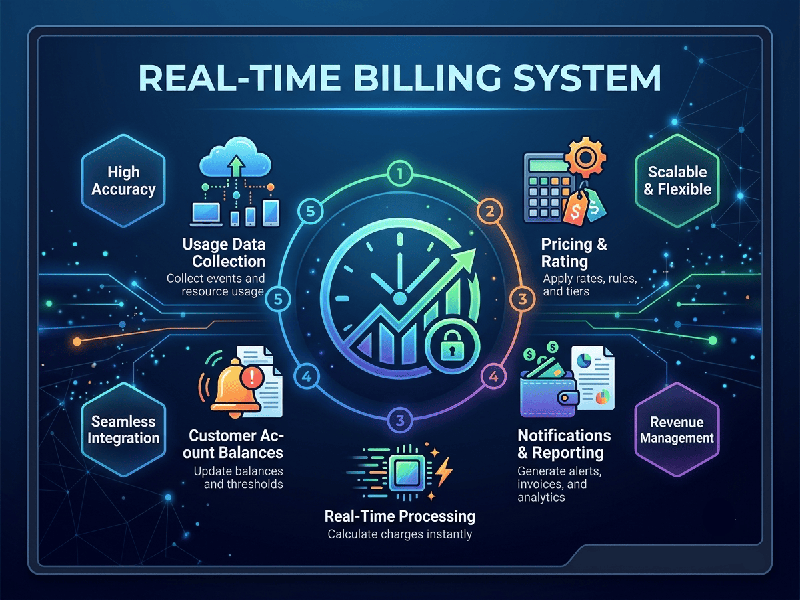
Real-Time Billing Systems
Real-Time Billing Systems (also known as Online Charging
Systems or Real-Time Rating Engines) process transaction usage, evaluate
complex pricing rules, deduct balances, and authorize service access instantly
as consumption occurs. Unlike traditional batch billing—which aggregates data
post-consumption—real-time billing evaluates events within milliseconds,
eliminating credit risk and enabling dynamic, usage-based monetization models.
Core Architecture & Building Blocks
- Usage Event Mediation & Ingestion: Ingests high-throughput event
streams (via protocols like Kafka, gRPC, or Diameter/3GPP interfaces) from
API gateways, network switches, or IoT sensors in real time.
- Rating & Charging Engine: Computes exact unit pricing
dynamically based on contextual variables (time of day, tier thresholds,
region, bandwidth, or AI token usage).
- Account Balance &
Reservation Manager: Conducts sub-millisecond wallet balance checks and locks active
reservations (e.g., reserving funds for 10 minutes of charging or 1GB of
data) before granting access.
- Notifications & Spending
Controls:
Triggers automated alerts, soft caps, or hard cut-offs instantly when
spending thresholds or balance limits are breached.
1.Event Generation & Stream Ingestion:Capture raw consumption events at high throughput.Sensors, microservices, or gateways emit usage events (e.g., API calls, compute duration, kilowatt-hours). The mediation layer ingests these records using distributed messaging systems like Apache Kafka.
2.Real-Time Rating & Rule Evaluation:Match events against user tiers and active discounts.
The rating engine evaluates active promotions, volume
discounts, time-based multipliers, and contract rules to assign precise
currency value to the raw usage event.
3.Balance Reservation & Ledger Update:Perform atomic balance checks and fund locking.
The balance engine checks the account wallet
(in-memory datastores like Redis or Aerospike), deducts funds or usage credits
atomically, and updates ledger tables.
4.Session Authorization & Policy Enforcement:Enforce limits or extend authorization.
If funds remain available, the system sends an extension signal to keep the service session active; if depleted, it enforces rate throttling, triggers top-up prompts, or terminates access immediately.