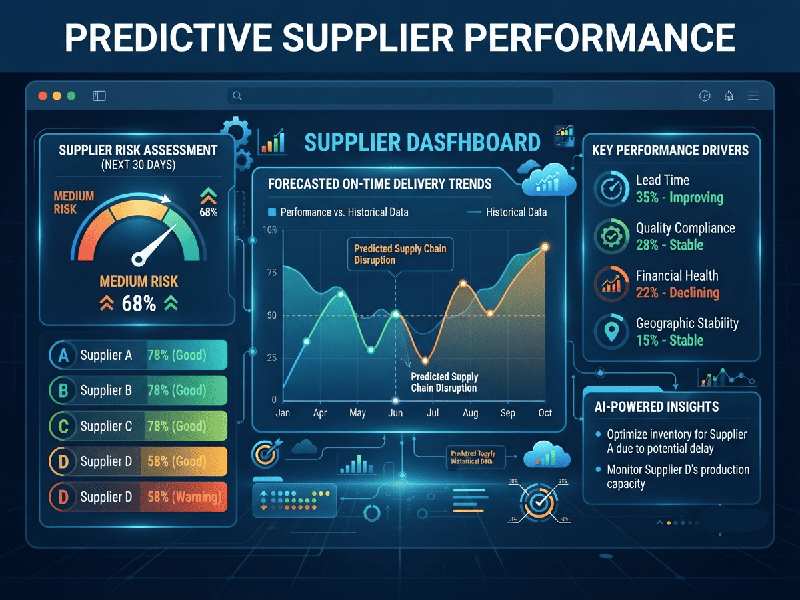
Predictive Supplier Performance
Predictive Supplier Performance uses AI and machine
learning to analyze historical data, real-time updates, and external market
factors to anticipate future supplier risks and performance trends
before they disrupt your operations.
Unlike traditional supplier management that relies on
reactive "scorecards" based on past performance, predictive analysis
provides a forward-looking view, answering questions like: Which orders are
at high risk of delay next month? or Which supplier is likely to face
quality issues based on recent process trends?.
Key Capabilities
- Risk Anticipation: Identifies potential
disruptions—such as late deliveries, material shortages, or quality
defects—before they escalate.
- Actionable Insights: Rather than just flagging
issues, predictive models often recommend specific actions, such as
expediting shipments, reallocating inventory, or engaging backup
suppliers.
- Continuous Learning: Systems use feedback loops to
validate predictions against real-world outcomes, constantly improving the
accuracy of future forecasts.
Steps to Implementation
Implementing a predictive framework requires moving
from disorganized data to automated, governed action:
1.
Multi-Source Data Harvesting: Aggregate data from internal systems (ERP, WMS, CRM) and
external sources (weather sensors, GPS telemetry, geopolitical news).
2.
Cloud Ingestion & Standardization: Centralize data in the cloud, ensuring consistent
naming, removing duplicates, and enforcing security compliance.
3.
Machine Learning Application: Feed processed data into algorithms that detect non-linear
patterns and seasonal divergences.
4.
Visualization & Decision Support: Translate mathematical probabilities into
easy-to-read executive dashboards that highlight risk exposure.
5.
Guided Execution: Integrate these alerts into your daily workflows (e.g., automated email
follow-ups or procurement requisitions) so teams can act immediately.
6.
Continuous Feedback: Regularly validate the model's predictions against reality to refine the
algorithm’s performance over time.