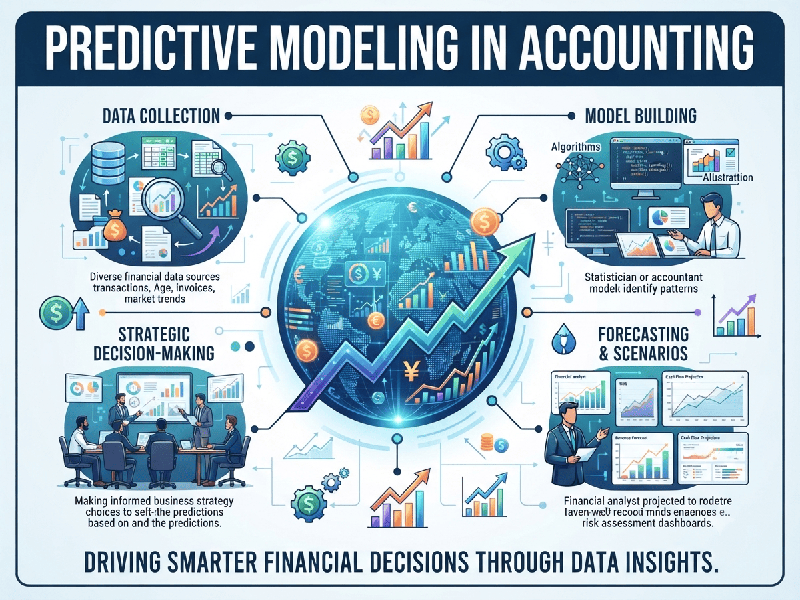
Predictive Modeling in Accounting
Predictive Modeling in Accounting is the practice of using historical
financial data, statistical algorithms, and machine learning techniques to
forecast future financial outcomes, trends, and potential risks. By shifting
accounting from a historical, retrospective reporting function into a
forward-looking strategic advisory tool, organizations can anticipate financial
events rather than simply recording them after they happen.
Core Application Areas in Accounting
1.
Cash Flow Forecasting
o Projects future cash inflows and
outflows based on historical payment patterns, seasonal trends, and upcoming
financial obligations.
o Helps organizations prevent liquidity
crunches and optimize working capital management.
2.
Revenue and Expense Projections
o Uses historical sales data, market
conditions, and operational metrics to predict upcoming revenue streams and
overhead costs with higher precision.
o Facilitates rolling forecasts rather
than rigid, static annual budgets.
3.
Anomaly Detection & Fraud Prevention
o Automatically analyzes millions of
transactions in real-time to flag unusual patterns, duplicate invoices,
unauthorized expenses, or suspicious journal entries.
o Reduces the risk of occupational
fraud and financial statement errors.
4.
Credit Risk & Customer Default Scoring
o Evaluates customer payment histories
and external credit data to predict the likelihood of late payments or
defaults.
o Guides credit limit decisions and
optimizes provisions for bad debt.
Key Benefits for Financial Teams
- Proactive Decision-Making: Empowers CFOs and finance
leaders to make swift, data-driven operational adjustments before market
shifts impact the bottom line.
- Enhanced Budgetary Accuracy: Minimizes large variances
between forecasted budgets and actual financials through continuous,
algorithm-driven refinement.
- Optimized Resource Allocation: Streamlines accounts payable
and receivable workflows by prioritizing high-risk accounts or high-value
tasks.
- Strengthened Compliance &
Audit Readiness:
Automated tracking and anomaly flagging ensure cleaner books and reduce
manual errors during internal and external audits.