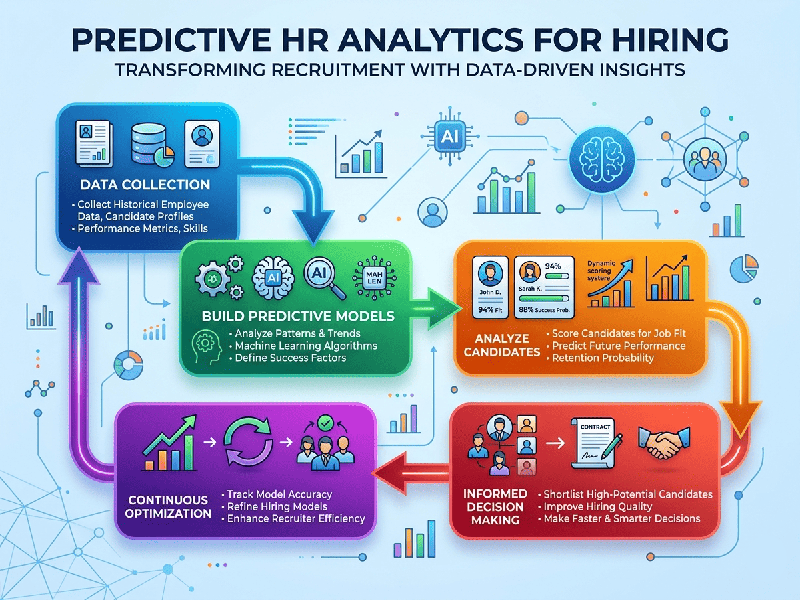
Predictive HR Analytics for Hiring
Predictive HR Analytics for hiring leverages historical data,
statistical algorithms, and machine learning to identify the likelihood of
success for job candidates. Instead of relying solely on intuition or
traditional resume screening, companies use these models to forecast candidate
performance, cultural fit, and retention.
Core Objectives of Predictive Hiring
- Quality of Hire: Identifying candidates whose
skills and behaviors correlate with high-performance metrics within your
organization.
- Retention Forecasting: Predicting the likelihood of a
candidate leaving within the first 12–24 months.
- Time-to-Hire Reduction: Automating the initial
screening process to focus human effort only on the most promising leads.
- Diversity & Bias Reduction: Removing human cognitive bias
by standardizing the evaluation criteria across all applicants.
Essential Data Inputs for Predictive Models
To build a functional model, you must aggregate data from
across your organization:
1.
Historical Performance Data: Ratings from past performance reviews mapped against
original hiring criteria.
2.
Sourcing Data:
Tracking which channels (LinkedIn, referrals, job boards) produce the
highest-tenured employees.
3.
Assessment Results: Scores from cognitive ability tests, personality assessments, and
technical skill benchmarks.
4.
Interview Feedback: Structured qualitative data converted into quantitative scores.
Critical Considerations for Implementation
- Data Integrity: Predictive models are only as
good as the underlying data. Ensure your ATS data is clean, consistent,
and free of historical gaps.
- Ethical AI & Compliance: Be mindful of "algorithmic
bias." If your historical hiring data reflects past biases, the model
will learn and perpetuate them. Conduct regular fairness audits to ensure
the AI doesn't discriminate based on protected characteristics.
- The
"Human-in-the-Loop" Rule: Predictive analytics should act as a decision-support
tool, not a decision-maker. Use it to flag high-potential candidates,
but let human managers make the final hiring decision to maintain empathy
and nuance.