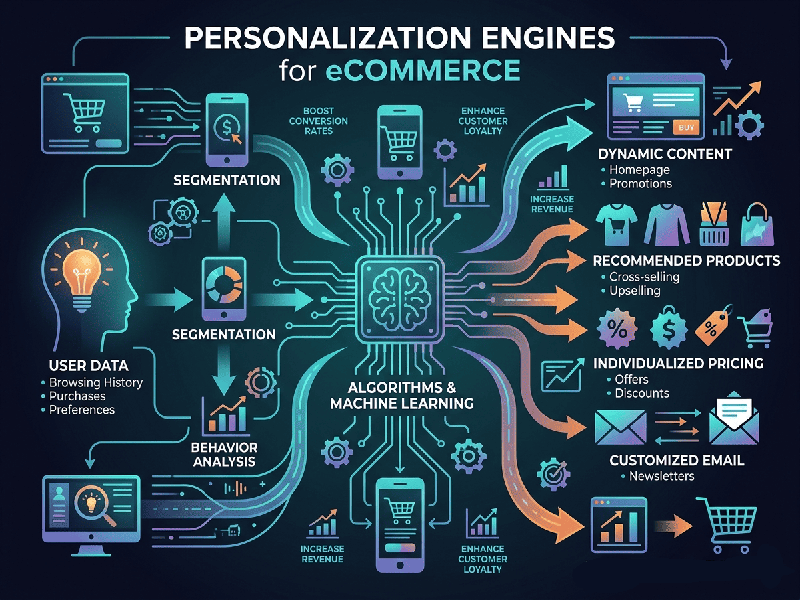
Personalization Engines for eCommerce
Personalization engines have evolved from simple
"if-then" recommendation tools into sophisticated, AI-driven
platforms that orchestrate the entire customer journey in real time. For
businesses—especially those in competitive sectors like organic foods or
international trade—these engines serve as the bridge between raw data and
customer loyalty.
What is a Personalization Engine?
At its core, a personalization engine is a software layer
that uses AI and machine learning to analyze customer data (behavioral,
demographic, and contextual) to deliver the most relevant experience to an
individual across all digital touchpoints.
Key Capabilities and Features
Modern engines go beyond just "Recommended for You"
carousels. They manage:
- Dynamic Content: Tailoring website banners, hero
images, and landing pages based on a user’s segment or past behavior.
- Behavioral Targeting: Re-engaging users who abandoned
a cart or browsed specific categories with triggered emails or push
notifications.
- Intelligent Search: Reordering site search results
based on the individual's visual preferences or past purchase history.
- Omnichannel Consistency: Ensuring that a customer seeing
a specific discount in an email sees the same offer when they land on the
website.
- Predictive Analytics: Forecasting when a customer is
likely to run out of a product and sending a timely restock reminder.
Implementation Strategies
To get the most out of these engines, consider the following
approach:
1.
Prioritize Zero-Party Data: Use quizzes or preference centers to let customers tell you
exactly what they want. This data is highly accurate and builds trust.
2.
Focus on "Complete the Look": For niche markets, AI can suggest complementary items
(e.g., suggesting specific spices to go with an organic grain purchase) to
increase average order value.
3.
Leverage Geographical Data: Use location-based personalization to display
region-specific shipping timelines or currency (like the ₹ Rupee for the
Indian market) automatically.
4.
A/B Test Everything: Don't assume an AI model is perfect. Use the engine’s built-in testing
tools to verify that personalized banners actually outperform generic ones.