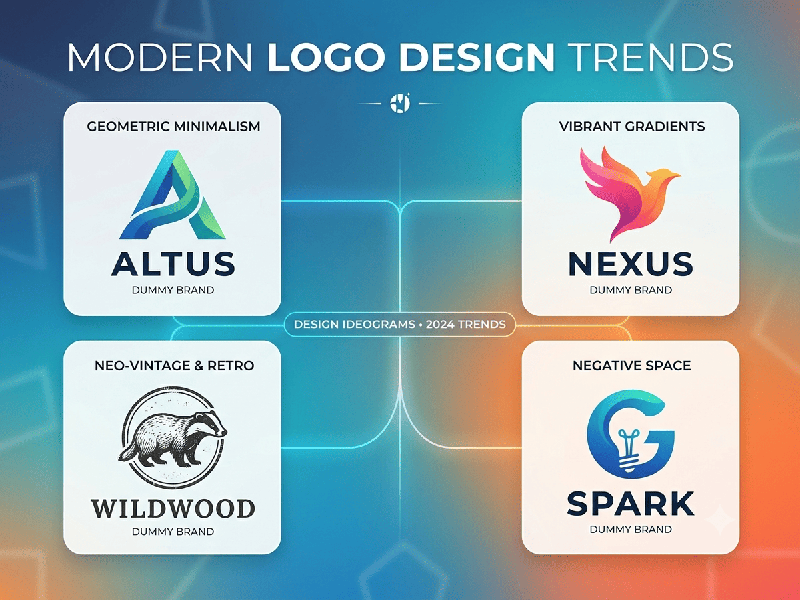
Modern Logo Design Trends
Logo design in 2026 is defined by a
"human-centric" rebellion against the sterile, perfectly symmetrical
designs of the past. While digital efficiency remains, brands are increasingly
choosing to inject warmth, personality, and tactile imperfection to distinguish
themselves from AI-generated "sameness."
1. The Human Touch (Tactile & Imperfect)
As a pushback against hyper-polished, frictionless
digital aesthetics, brands are embracing "designed imperfection."
- Hand-Crafted Elements: Logos often feature hand-drawn
typography, uneven lines, or brush-stroke textures that signal
authenticity.
- Tactile Textures: Designs incorporate subtle
grain, paper-like textures, or "scuffed" edges to make a digital
logo feel like it was physically crafted.
- Naive Design: A trend toward playful,
slightly "messy" or childlike shapes that prioritize personality
over corporate slickness.
2. Neo-Minimalism (Minimalism 2.0)
Minimalism hasn’t disappeared, but it has evolved from
cold, sterile lines to a warmer, more inviting aesthetic.
- Added Nuance: Designers are replacing stark
black-and-white grids with muted, earthy color palettes (e.g., chocolate,
sage, or soft terracotta).
- Emotional Clarity: The focus is on using white
space and soft curves to reduce cognitive load while still feeling
approachable rather than strictly functional.
- Dynamic Serif Fonts: Elegant serif typefaces are
making a comeback, often featuring high-contrast "stressed
waists" (thin-to-thick strokes) that add sophistication without
complexity.
3. Hyper-Expressive Typography
The brand name itself is increasingly becoming the
logo.
- Wordmarks as Marks: Rather than a separate icon and
text, the wordmark is the primary identifier.
- Kinetic & Variable Fonts: Type is being manipulated with
exaggerated ligatures, playful baselines, or tight kerning. In digital
applications, these fonts shift weight or slant to reflect the brand's
"mood" or movement.
4. Dynamic & Adaptive Systems
Logos are no longer static assets; they are treated as
fluid systems.
- Contextual Flexibility: A modern logo should
"breathe" and change based on where it lives. It might shift
color, shape, or composition depending on whether it is a tiny favicon, a
billboard, or a seasonal marketing push.
- Motion-First: With digital screens being the
primary touchpoint, motion is built into the logo from the start. This
includes micro-interactions (e.g., a logo that bounces, morphs, or
animates on a hover action).
5. Nostalgia Meets Futurism
A common design theme is the juxtaposition of vintage
aesthetics with modern execution.
- Retro-Futurism: Blending 1970s warmth or 1990s
Y2K vibrancy with sleek, modern geometric shapes.
- Atmospheric Gradients: Replacing neon-bright gradients
with soft, moody, cinematic blends that feel deep and immersive rather
than flat.
6. Sustainability-Led Aesthetics
As ethical consumerism grows, brand design is
reflecting an "honest" approach.
- Transparency: Imagery and iconography are
moving away from manipulation toward "honest" visuals that
reflect real-world values. This often translates into eco-friendly color
palettes and simple, clear iconography that emphasizes transparency over
corporate flash.