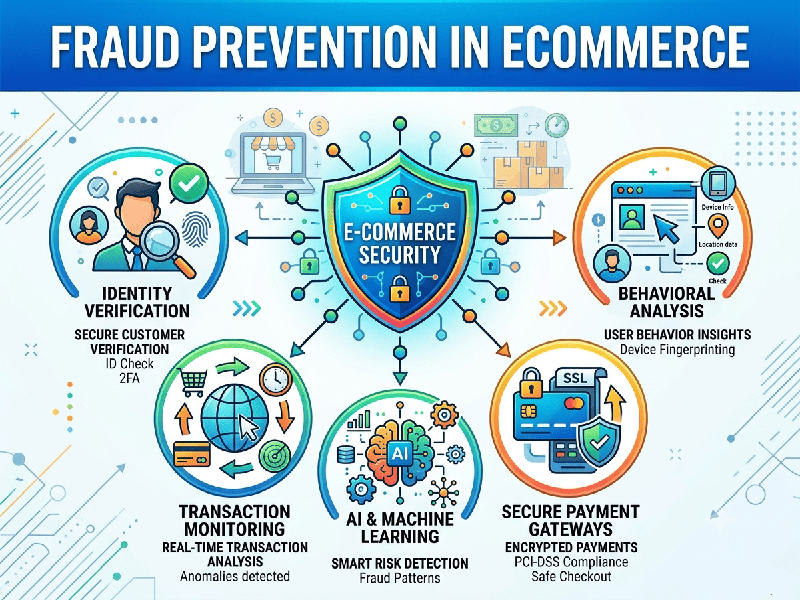
Fraud Prevention in eCommerce
Fraud prevention in eCommerce requires a
multi-layered, proactive strategy that balances security with a seamless
customer experience. In the 2026 landscape, the focus has shifted toward
adaptive, AI-driven systems that move beyond static rules to identify complex,
evolving threats.
1. Foundational Security Layers
- Multi-Factor Authentication
(MFA):
Essential for account security. Implement OTPs, authenticator apps, or
biometrics to verify identity during logins and high-risk transactions.
- Payment Security: Ensure full compliance with PCI
DSS standards. Utilize 3D Secure 2.0 for payments, as it provides
risk-based authentication, applying friction (like an additional check)
only when a transaction is flagged as suspicious.
- Data Protection: Use SSL/TLS encryption for all
data in transit to prevent interception. Regularly audit your platforms to
remove inactive plugins and patch security vulnerabilities.
2. Advanced Detection & Prevention Technologies
- AI & Machine Learning (ML): Modern platforms use ML to
analyze thousands of data points in real-time, such as device
fingerprinting, behavioral patterns, and network reputation. This helps
catch "card-not-present" (CNP) fraud that rule-based systems
often miss.
- Behavioral Analytics: Monitor how users interact with
your site. Indicators like non-human mouse movements, unusual typing
rhythms, or rapid device switching often signal bot-driven attacks or
account takeover attempts.
- Velocity Checks: Automatically flag or block
accounts/IP addresses that exhibit suspicious behavior, such as multiple
failed login attempts or a high volume of purchases in a very short
timeframe.
- Device Fingerprinting: Create unique identifiers for
devices based on browser, OS, and hardware settings to track returning bad
actors, even if they attempt to mask their identity using VPNs or proxy
servers.
3. Contextual Strategies for the Indian Market
Given the specific regulatory and operational
environment in India:
- Merchant Verification: If you operate a marketplace,
rigorous onboarding is your first line of defense. Verify business
identity using GSTIN lookups, MCA21/CIN checks, and matching registered
business addresses against digital signals.
- OTP-Based Delivery: For high-value or sensitive
orders, adopt an "OTP for delivery" model (similar to Amazon
India) to ensure the physical receipt matches the account holder.
- Regulatory Compliance: Ensure all payment aggregation
follows RBI guidelines, including periodic merchant due diligence and
transaction monitoring to prevent settlement risks.
4. Operational Best Practices
- Progressive Friction: Don't treat every user as a
suspect. Start with low-friction checkout and introduce
"step-up" authentication (e.g., an extra verification step) only
when a transaction's risk score crosses a certain threshold.
- Human-in-the-Loop: Balance automation with expert
review. Aim for a 30%–60% review-then-decline rate; if you are
declining far more than that automatically, you may be losing legitimate
revenue.
- Chargeback Management: Keep meticulous digital
logs—shipping confirmations, IP logs, and customer communication
records—to successfully contest "friendly fraud" (when a
customer claims they didn't authorize a charge).
5. Key Metrics for Success
Evaluate your fraud prevention platform based on three
concurrent metrics:
1.
Fraud Loss Reduction: The primary goal.
2.
False Positive Rate: Ensure legitimate customers aren't being blocked.
3.
Authorization Lift: A good system should actually improve your ability to approve valid
orders by providing issuers with more confidence in your traffic.