Micro apps vs Super apps
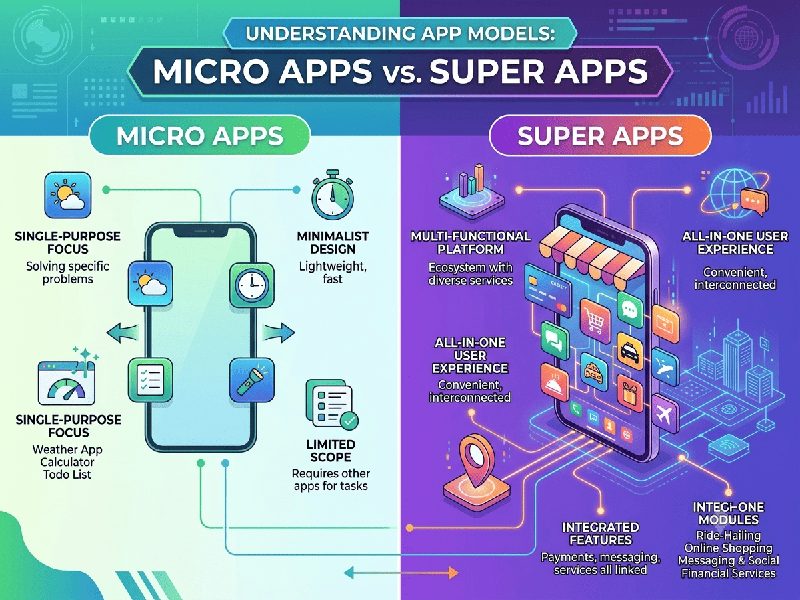
Micro apps and super apps represent opposite
architectural approaches to digital product design and ecosystem management. A
micro app is a focused, single-purpose tool built to complete one specific task
efficiently, whereas a super app is a unified platform hosting a ecosystem of
mini-programs that cover diverse daily needs.
Core Structural Breakdown
- Micro Apps: Modular, lightweight
applications designed to do one thing exceptionally well (e.g., expense
logging, single-purpose calculator, quick delivery tracking). They
emphasize zero friction, minimal setup, and fast execution.
- Super Apps: All-in-one ecosystems (e.g.,
WeChat, Alipay, Grab) that combine messaging, payments, ride-hailing,
e-commerce, and public services within a single interface, utilizing an
integrated digital wallet and unified identity.
Strategic Architectural Trade-offs
- Development Speed: Micro apps allow rapid
prototyping, quick deployment, and isolated testing. Super apps require
massive API infrastructures, strict mini-program frameworks, and complex
developer governance.
- User Acquisition vs. Retention: Micro apps face high user
acquisition costs because users install them for a single function and may
abandon them. Super apps achieve high daily active usage (DAU) and
retention by embedding themselves into everyday routines.
- Data Integration: Super apps aggregate massive
cross-vertical user data (chat history, financial records, purchasing
habits) into unified profiles, while micro apps operate on isolated,
privacy-contained data silos.