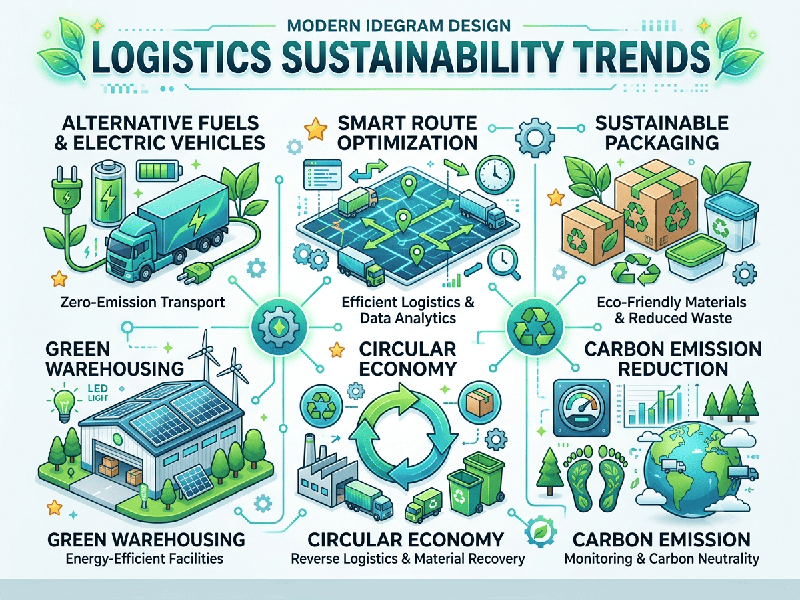
Logistics Sustainability Trends
Logistics sustainability in 2026 has moved from a
"nice-to-have" corporate goal to an essential, technology-driven
operational standard. Modern green supply chains focus on measurable emission
reductions, energy efficiency, and data transparency across every node of the
network.
1. AI-Driven Route Optimization and Forecasting
Artificial intelligence is now acting as an autonomous
logistics coordinator. By analyzing real-time traffic, weather, and port
congestion, AI dynamically reroutes shipments to minimize idling and fuel
consumption. Advanced demand forecasting ensures inventory is placed closer to
the end consumer, drastically reducing "empty miles" and minimizing
wasteful transport.
2. Fleet Electrification and Alternative Marine Fuels
Transportation remains the largest source of supply
chain emissions.
- Last-Mile Delivery: Urban delivery networks are
rapidly transitioning to electric vehicle (EV) fleets, cargo bikes, and
compact electric vans to eliminate tailpipe emissions in densely populated
areas.
- Maritime Shipping: To comply with stricter
international carbon intensity regulations, sea freight operators are
increasingly deploying vessels powered by cleaner alternative fuels like
liquefied natural gas (LNG), methanol, hydrogen, and ammonia.
3. Blockchain for Export Traceability
Sustainable logistics relies heavily on transparency.
Blockchain technology is increasingly used for export traceability, allowing
shippers to securely track the carbon footprint and ethical sourcing origins of
a product across borders. This transition to smart documentation also
eliminates massive amounts of paper waste traditionally associated with
international trade.
4. Real-Time Carbon Tracking Dashboards
Regulators, investors, and corporate clients now
demand precise environmental logistics reporting. Modern digital freight
platforms feature built-in carbon dashboards that calculate emissions per
shipment or specific route in real-time. This visibility allows businesses to
actively select lower-carbon carrier options and balance operational speed
against environmental impact.
5. Circular and Reusable Packaging Loops
The industry is shifting away from single-use
materials toward a circular economy model. Smart tracking systems manage
durable, reusable containers that can be retrieved, sanitized, and redeployed.
This dramatically reduces reliance on single-use plastics and cardboard,
generating significant long-term cost savings—often amounting to millions of ₹
annually for high-volume shippers—while minimizing landfill waste.