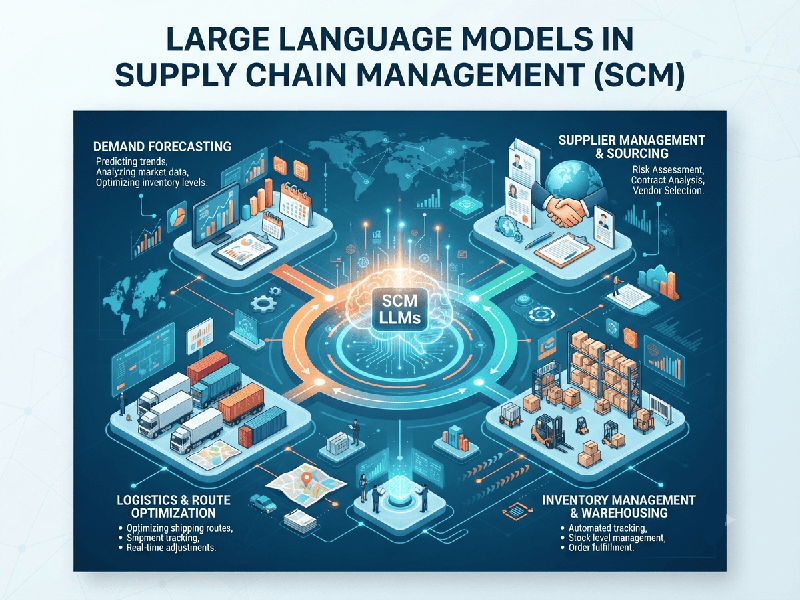
Large Language Models in SCM
Large Language Models (LLMs) are transforming Supply
Chain Management (SCM) by shifting the industry from reactive, rule-based
systems to proactive, intelligence-driven decision-making. Their primary
value lies in their ability to synthesize vast amounts of both structured
(databases) and unstructured (news, emails, social media) data into actionable
insights.
Core Applications of LLMs in SCM
1. Enhanced Demand Forecasting & Planning
- Broad Data Integration: Unlike traditional models that
rely strictly on historical sales data, LLMs can ingest and analyze
external variables like geopolitical events, social media trends, economic
reports, and weather forecasts.
- Scenario Modeling: They allow planners to simulate
"what-if" scenarios, helping businesses adjust inventory levels
and production schedules dynamically based on real-time market shifts.
2. Procurement & Supplier Management
- Automated Contracting: LLMs can draft, review, and
extract clauses from complex supplier contracts, significantly reducing
the time and legal cost of procurement.
- Performance Monitoring: By analyzing communication
patterns and delivery logs, LLMs can assess supplier reliability, detect
potential delays before they occur, and suggest alternative sourcing
strategies.
3. Intelligent Logistics & Operations
- Route Optimization: By processing live data streams
(GPS, traffic, weather), LLMs assist in dynamic rerouting, which helps
reduce fuel consumption and improves on-time delivery rates.
- Warehouse Management: LLM-integrated systems allow
warehouse operators to query inventory status in natural language (e.g.,
"What is the stock level of product X in zone Y?") and receive
instant, visualized reports.
4. Risk Mitigation & Resilience
- Early Warning Systems: By monitoring global news and
sentiment, LLMs act as an "early warning" system for
disruptions, such as natural disasters, labor strikes, or port congestion,
allowing companies to pivot operations before they are impacted.
5. Documentation & Compliance
- Process Automation: LLMs excel at automating
routine, paperwork-heavy tasks like customs documentation, compliance
filings, and invoice processing, which minimizes human error and speeds up
cross-border trade.