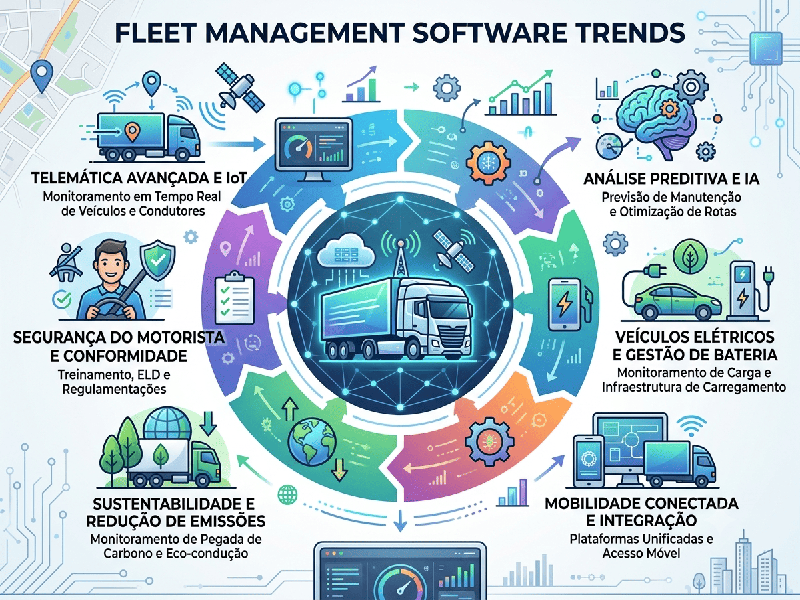
Fleet Management Software Trends
Fleet management software is currently undergoing a
massive transformation driven by the need for greater efficiency,
sustainability, and data-driven decision-making. As of mid-2026, the industry
is moving away from simple tracking toward integrated, predictive, and
intelligent ecosystems.
1. The Rise of AI and Predictive Analytics
Modern software is shifting from reactive reporting to
proactive management.
- Predictive Maintenance: AI algorithms analyze
telematics data (engine codes, temperature, vibration) to predict when a
part will fail. This helps fleets perform maintenance before a
breakdown occurs, reducing downtime by 25-30%.
- AI-Powered Safety: Advanced dash cams now use edge
computing to detect driver distraction, fatigue, and risky behaviors (like
tailgating or harsh braking) in real-time, providing immediate in-cab
audio alerts to the driver.
2. Fleet Electrification and Sustainability
Sustainability is no longer a "nice-to-have"
but a core operational requirement.
- EV Management Tools: As fleets transition to
electric vehicles (EVs), software is evolving to track battery health,
state-of-charge, and energy consumption.
- Charging Infrastructure
Integration:
Advanced platforms now integrate with charging networks to optimize
charging schedules based on electricity costs and route requirements,
ensuring vehicles are ready when needed.
3. Data Integration and "The Unified View"
The biggest challenge for large fleets today is the
"data silo" problem—having too much data from different sources (GPS,
fuel cards, maintenance apps) that don't "talk" to each other.
- Interoperability: The current trend is toward
platforms that prioritize API integrations. Fleet managers are demanding
software that consolidates data from across the business to provide a
single, trustworthy dashboard.
- Big Data Processing: As connected vehicles generate
massive amounts of data, modern software platforms are using Big Data
tools to distill that information into actionable insights rather than
overwhelming managers with raw numbers.
4. Advanced Telematics and IoT
Telematics has expanded beyond simple location
tracking.
- Real-Time Intelligence: Modern telematics provide
granular data on engine performance, PTO (Power Take-Off) usage, and
driver behavior.
- IoT Sensors: Beyond vehicles, IoT sensors
are used in logistics to monitor cargo conditions (temperature, humidity,
shock) in real-time, which is essential for cold-chain and sensitive goods
transport.
5. Improved Driver Experience
Recognizing that skilled drivers are in high demand,
software is becoming more driver-centric.
- Intuitive Interfaces: Mobile apps for drivers are
becoming more user-friendly to reduce the administrative burden of DVIRs
(Driver Vehicle Inspection Reports) and HOS (Hours of Service) compliance.
- Gamification: Some platforms now use
rewards-based systems, turning safe driving into a competitive and
engaging experience to boost morale and retention.