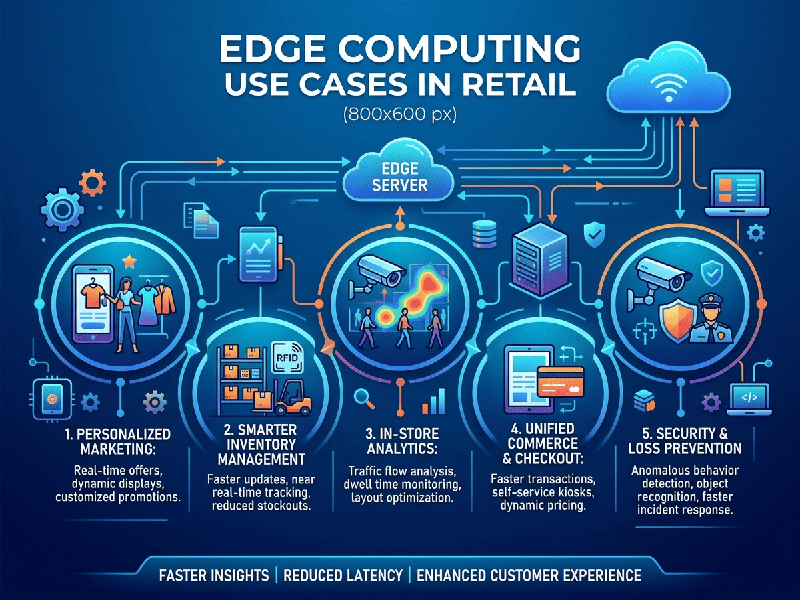
Edge Computing Use Cases in Retail
Retail landscape, edge computing has moved from
an experimental concept to a foundational requirement for physical stores. By
processing data locally—directly in the store—rather than sending it to a
distant cloud server, retailers eliminate the latency that kills customer
experiences and causes operational bottlenecks.
Key Edge Computing Use Cases in Retail
1. Real-Time Customer Personalization
Physical stores now aim to match the speed and
personalization of e-commerce.
- Contextual Signage: Edge devices analyze local foot
traffic or specific shelf interactions (via computer vision or RFID) to
instantly update digital displays with promotions tailored to the shoppers
currently in that aisle.
- Smart Kiosks: Interactive product-finder
kiosks run locally, ensuring that product searches, availability checks,
and loyalty program interactions remain lightning-fast even if the store’s
internet connection fluctuates.
2. Frictionless Checkout & Loss Prevention
- AI-Driven Surveillance: Instead of streaming raw,
bandwidth-heavy video feeds to the cloud, edge nodes process video locally
to detect "shrinkage" (theft) or queue congestion in real-time.
This triggers instant alerts to staff without compromising privacy or
saturating the network.
- Autonomous Checkout: Technologies like
"just-walk-out" systems rely on sub-millisecond processing of
sensor and camera data. Running this logic at the edge is the only way to
ensure the checkout experience is truly seamless and immune to internet
outages.
3. Automated Inventory & Supply Chain Visibility
- Dynamic Stock Reconciliation: As items are picked up or sold,
edge-connected RFID and shelf sensors update local inventory databases
instantly. This allows store managers to make immediate replenishment
decisions rather than waiting for nightly batch updates from the central
office.
- Automated Backroom Management: Edge AI can monitor warehouse
automation robots or smart-sorting systems to ensure that goods move from
the loading dock to the floor with minimal latency and high resilience
against connectivity drops.
4. Operational Resilience and "Smart Store" Control
- Always-On Transactions: By hosting core POS and
transaction logic on local edge servers, stores can continue to process
payments, issue receipts, and sync loyalty points even during a total
WAN/ISP outage.
- Energy & Facility
Management:
Sensors monitor HVAC, lighting, and refrigeration at the edge. The system
can automatically route power to sensitive cooling units during a heatwave
or dim lighting in empty sections of the store, optimizing energy costs
without needing human intervention.