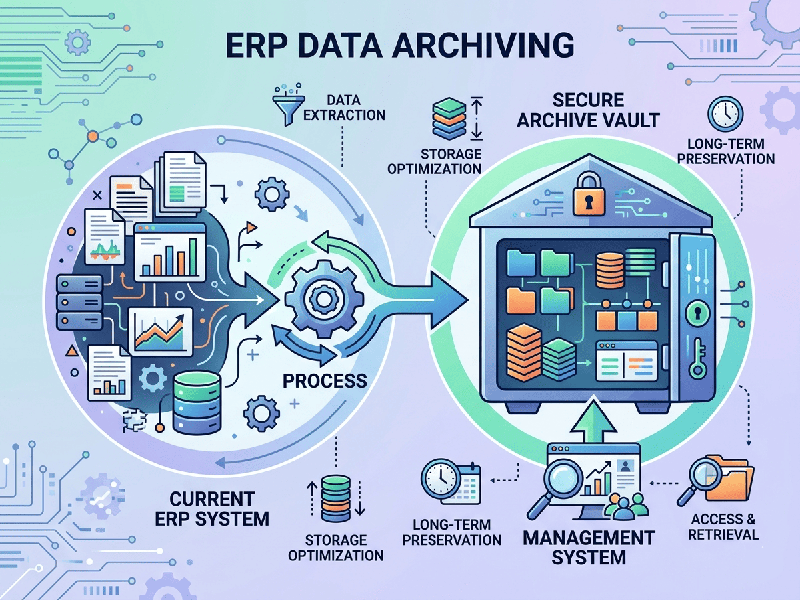
ERP Data Archiving
As Enterprise Resource Planning (ERP) systems mature, the
volume of historical data can degrade system performance and increase storage
costs. Data Archiving is the process of moving inactive,
"cold" data from the primary database to a secondary, long-term
storage environment while maintaining its accessibility for legal, audit, and
historical purposes.
1. The Core Benefits
- System Performance: Reducing the database size
leads to faster backups, quicker report generation, and improved response
times for active transactions.
- Cost Reduction: Moving data from expensive,
high-performance storage (like SSDs or In-Memory databases) to low-cost
cloud "cold" storage or tiered archiving solutions significantly
lowers TCO.
- Upgrade Facilitation: Archiving is a critical
prerequisite for migrating to next-generation platforms (e.g., moving to
SAP S/4HANA), as it reduces the footprint of the migration.
- Compliance & Risk: Automated archiving ensures
that data is retained according to statutory requirements (like tax laws)
and deleted securely once its retention period expires.
2. The Archiving Process
1.
Analysis:
Identify data that is no longer required for daily operations based on the residence
time (how long it stays in the live DB).
2.
Validation: Perform
"Business Completeness" checks. For example, a Purchase Order cannot
be archived unless it is fully paid and closed.
3.
Extraction:
Move the data objects (Invoices, Ledger entries, Log files) into a compressed,
read-only archive file.
4.
Deletion: Once
the archive file is verified and backed up, the original data is purged from
the production database.
3. Key Challenges
- Data Integrity: Maintaining the links between
archived records (e.g., linking an archived invoice to an archived
customer record).
- Access Speed: Ensuring that auditors or tax
authorities can retrieve archived data within a reasonable timeframe.
- Regulatory Changes: Different countries have
varying retention periods (e.g., 7 years for Indian tax records vs. 10
years in other jurisdictions).