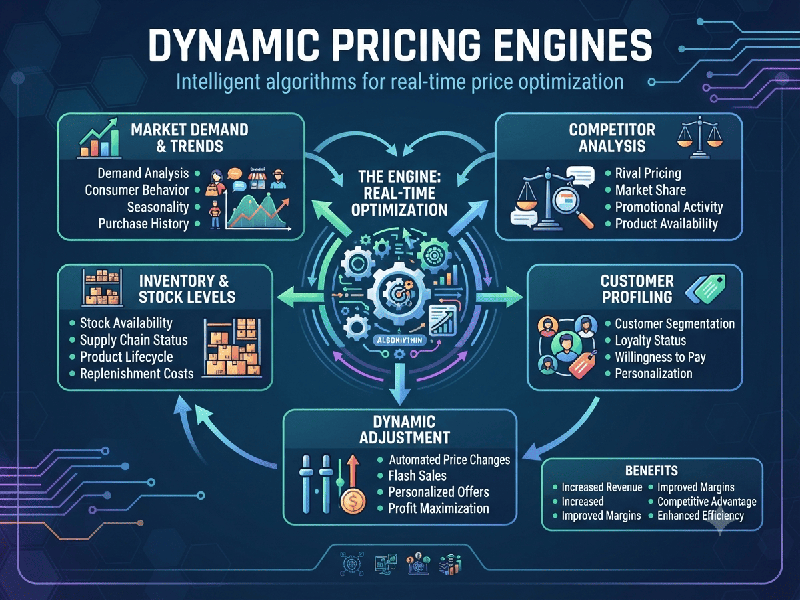
Dynamic Pricing Engines
A dynamic pricing engine is a software solution that
automatically adjusts the prices of products or services in real-time based on
market conditions, rather than relying on static, manual updates. By
continuously processing vast amounts of data, these engines help businesses
optimize revenue and maintain competitiveness.
The engine acts as the "brain" of a pricing
strategy by ingesting multiple data signals and applying pre-defined rules or
machine learning models to calculate the optimal price.
1.
Data Ingestion:
The engine collects real-time signals, including:
o Competitor Pricing: Monitoring rival websites and market
movements.
o Demand Trends: Analyzing seasonality, traffic, and
purchase patterns.
o Inventory Levels: Adjusting prices based on stock
abundance or scarcity.
o External Factors: Incorporating variables like
weather, events, or cost of raw materials.
o Customer Data: Segmenting users based on behavior,
loyalty, or price sensitivity.
2.
Processing:
Using AI and predictive algorithms, the engine compares this data against your
business objectives (e.g., maximizing margins, clearing old stock, or gaining
market share).
3.
Automated Execution: The engine automatically pushes the updated price to your sales channels
(website, app, or marketplace) at scale, ensuring your pricing is always
responsive.
Core Benefits for Businesses
- Margin Protection: Automatically passes through
increased costs (e.g., raw materials or logistics) to the customer in
real-time, preventing margin erosion.
- Revenue Optimization: Captures the full value of a
product during peak demand while stimulating sales during slower periods
via strategic discounts.
- Competitive Agility: Allows your brand to remain
competitive without constant manual oversight; for example, the system can
ensure your price is never more than 5% above a specific competitor.
- Efficient Inventory Management: Helps clear slow-moving
inventory by automatically triggering discounts, improving cash flow and
warehouse efficiency.
- Scalability: Eliminates the need for manual
price reviews, enabling businesses to manage thousands or millions of SKUs
simultaneously.
Common Pricing Strategies
- Demand-Based: Prices rise when demand is high
(e.g., ride-sharing surge pricing).
- Time-Based: Rates change based on time of
day, week, or season (e.g., hotel rates or flight tickets).
- Competitor-Based: Prices are set relative to the
competition to maintain a desired market position.
- Segment-Based: Offers tailored pricing or
discounts for specific groups, such as loyalty program members.