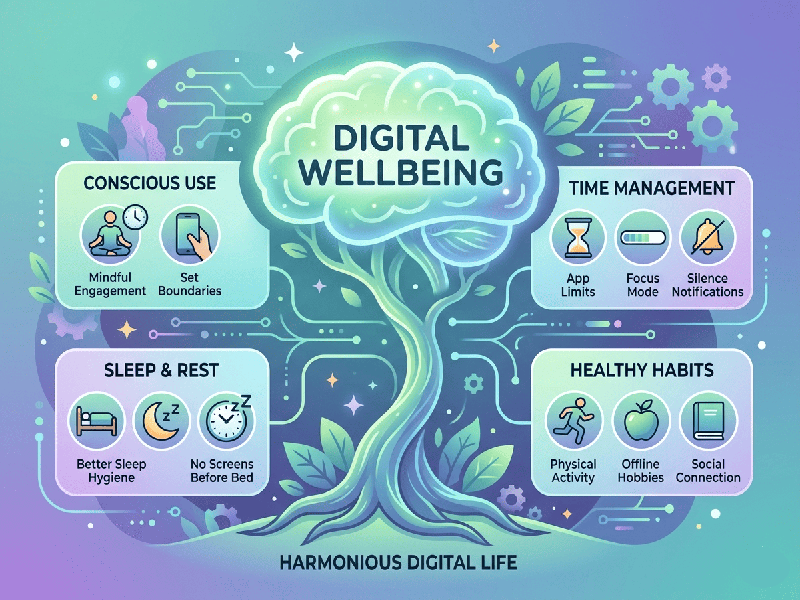
Digital Wellbeing Tools
Digital wellbeing tools in 2026 have moved beyond simple
screen-time trackers. They now function as AI-driven behavioral coaches
that actively manage cognitive load, reduce mental friction, and help maintain
work-life boundaries in an increasingly hyper-connected environment.
1. Top Tier Tools for Personal Wellbeing
These tools focus on the "Human-Computer
Interaction" (HCI) to ensure your devices serve your goals rather than
distracting from them.
- For Real-Time Cognitive
Reframing:
o MindLift: A leading 2026 tool that uses AI to
detect "thought spirals." Unlike traditional apps, it offers
micro-interventions (CBT-based reframing) in under 60 seconds to stop
overthinking in the moment.
o Finch: Gamifies self-care by linking the
health of a virtual pet to your real-world wellness habits (meditation,
journaling, and movement).
- For Focus & Deep Work:
o Tiimo: An AI-powered visual planner that
estimates the time needed for tasks and creates a step-by-step visual schedule,
particularly helpful for those with ADHD or heavy workloads.
o Focus Friend: A "Focus Sanctuary" app
that turns phone-locking into a game, rewarding you for staying away from
distracting apps during deep work sessions.
- For Physiological Regulation:
o iBreathe: A minimalist breathwork tool that
avoids "feature bloat" to guide you through stress-reduction cycles.
o Oye: Co-created by J Balvin, this app
focuses on "creative wellness," using art, music, and dance as
emotional processing tools.
2. On-Device AI Features (iOS & Android 2026)
Both major operating systems have integrated wellbeing
directly into the hardware level:
- Contextual Silencing: Your phone now understands
"Context." If it detects you are in a deep focus session or a
meeting via your calendar and activity patterns, it automatically
redirects non-urgent notifications to a "Summary" folder.
- On-Device Anomaly Detection: AI monitors heart rate
variability (HRV) and sleep patterns via wearables. If it detects signs of
burnout or illness before you feel it, the device suggests "Recovery
Days" and adjusts your daily goal targets.
- Writing Assistants for Mental
Load: Tools
that summarize long email threads or rewrite stressful messages in a
clearer tone, reducing the emotional energy required for digital
communication.