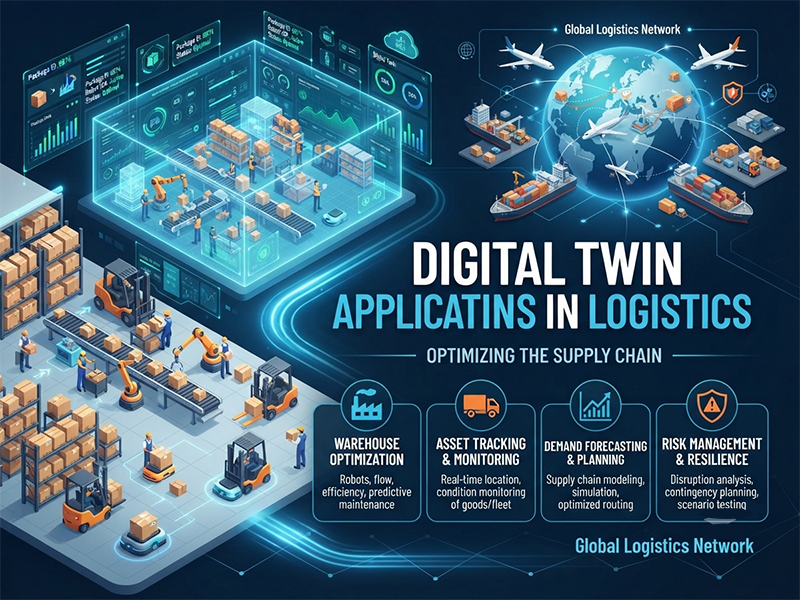
Digital Twin Applications in Logistics
A Digital Twin in logistics is a dynamic,
virtual replica of a physical supply chain network, warehouse, fleet, or
individual shipment. Powered by real-time Internet of Things (IoT) sensors,
RFID data, and artificial intelligence, a digital twin simulates real-world
logistics operations in a virtual environment. This allows supply chain
managers to monitor performance, run predictive simulations, and test
"what-if" scenarios before making changes in the physical world.
Key Benefits
- Predictive Risk Management: Anticipates bottlenecks, supply
chain disruptions, and delivery delays caused by weather, geopolitical
events, or port congestion before they impact operations.
- Cost & Route Optimization: Continuously analyzes live
traffic, fuel costs, and carrier performance to calculate the most
efficient shipping routes in real-time.
- Enhanced Warehouse Efficiency: Simulates warehouse floor
layouts, robotic picking paths, and inventory placement to maximize
throughput and minimize labor bottlenecks.
- End-to-End Visibility: Provides a single glass pane of
truth across global supply chain tiers, improving tracking accuracy for
enterprise stakeholders and customers.
Core Use Cases & Applications
1.
Warehouse & Fulfillment Twins:
o Recreates the exact physical layout
of a fulfillment center.
o Simulates autonomous mobile robot
(AMR) traffic and human picker paths to eliminate congestion and optimize
inventory slotting.
2.
Fleet & Transportation Management:
o Tracks vehicles, cargo temperature
(crucial for cold-chain logistics like food and pharmaceuticals), and driver
behavior.
o Predicts vehicle maintenance needs
using IoT telemetry data to prevent unexpected breakdowns on transit.
3.
Inventory & Network Optimization:
o Models multi-echelon inventory
networks to determine the ideal stock levels needed across regional hubs to
buffer against sudden demand surges.
o Simulates alternative supplier
networks instantly if primary trade lanes are disrupted.
Key Technologies Powering Logistics Twins
- IoT Sensors & RFID: Provide the constant stream of
real-time telemetry data (location, temperature, shock, and humidity)
required to keep the digital model synchronized with reality.
- AI & Machine Learning: Analyzes historical and live
data to forecast demand fluctuations and recommend automated corrective
actions.
- Cloud Infrastructure & IoT
Platforms:
Enterprise cloud platforms (such as Microsoft Azure Digital Twins, AWS IoT
TwinMaker, and Google Cloud) capable of processing massive volumes of
industrial telemetry data.