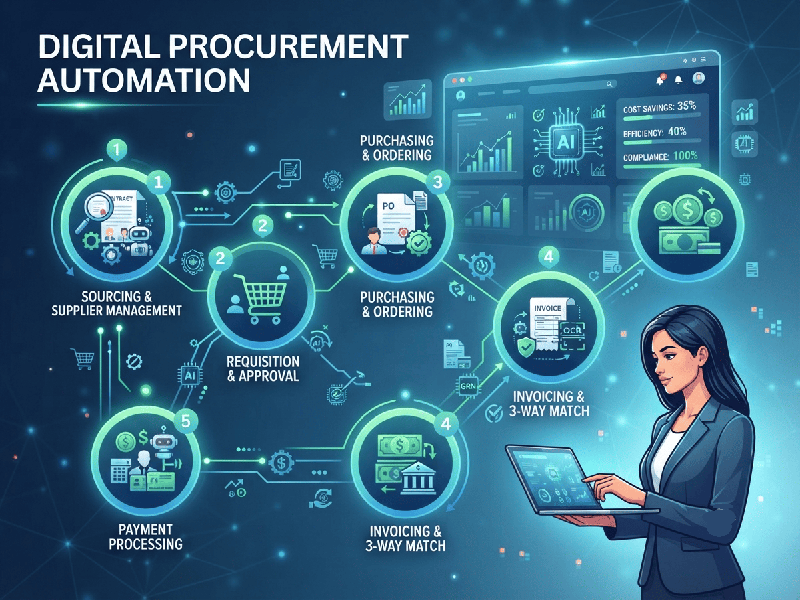
Digital Procurement Automation
Digital procurement automation replaces manual,
paper-heavy purchasing workflows with intelligent, software-driven processes.
By digitizing everything from requisition to invoice reconciliation,
organizations can eliminate bottlenecks, reduce maverick spending, and
accelerate the procure-to-pay (P2P) cycle.
1. Core Pillars of Procurement Automation
A fully digitized procurement ecosystem integrates
several interdependent stages into a single automated workflow:
- Automated Purchase Requisitions: Employees submit purchase
requests via self-service portals with pre-approved catalogs. Rules-based
routing automatically triggers managerial approvals based on department,
budget limits, or item category.
- Electronic Purchase Orders
(POs): Once
approved, the system automatically generates and dispatches POs to
approved vendors via electronic data interchange (EDI) or supplier
portals.
- Automated Three-Way Matching: The software automatically
cross-references data across the Purchase Order, Goods Received
Note (GRN), and Vendor Invoice to verify quantities and pricing
before releasing payment.
- Supplier Portal Integration: Gives suppliers direct
visibility into active orders, shipping status, payment milestones, and
compliance documents, minimizing back-and-forth emails.
2. Step-by-Step Implementation Framework
Transitioning from legacy procurement to an automated
digital model requires a disciplined approach:
- Audit Current Workflows: Map out your existing
purchasing bottlenecks, approval chokepoints, manual data entry points,
and invoice exception rates.
- Centralize Supplier Master Data: Cleanse and consolidate your
vendor database to ensure accurate tax IDs, banking details, compliance
records, and catalog pricing.
- Configure Approval Workflows
& Thresholds: Set up automated routing rules (e.g., low-value purchases under a
specific threshold bypass management and go straight to PO generation,
while high-value orders require executive sign-off).
- ERP & Financial Integration: Connect your procurement
automation software directly with your Enterprise Resource Planning (ERP)
and accounting platforms (such as SAP, Oracle, or QuickBooks) to maintain
real-time budget visibility.
3. Key Benefits & Best Practices
Automating your supply chain purchasing delivers
immediate operational and financial advantages:
- Eliminate Maverick Spend: Restricting employees to
pre-approved catalogs and contracted vendors prevents unauthorized,
off-contract purchasing that inflates costs.
- Capture Early Payment Discounts: Automated invoice matching
speeds up processing times, allowing your finance team to secure
early-payment discounts from key suppliers.
- Real-Time Spend Analytics: Use built-in dashboards to
track category spend, vendor performance metrics, and contract compliance
in real time.
- Local Currency Alignment: Ensure your procurement systems
and automated invoicing workflows seamlessly process transactions in your
local operating currency (