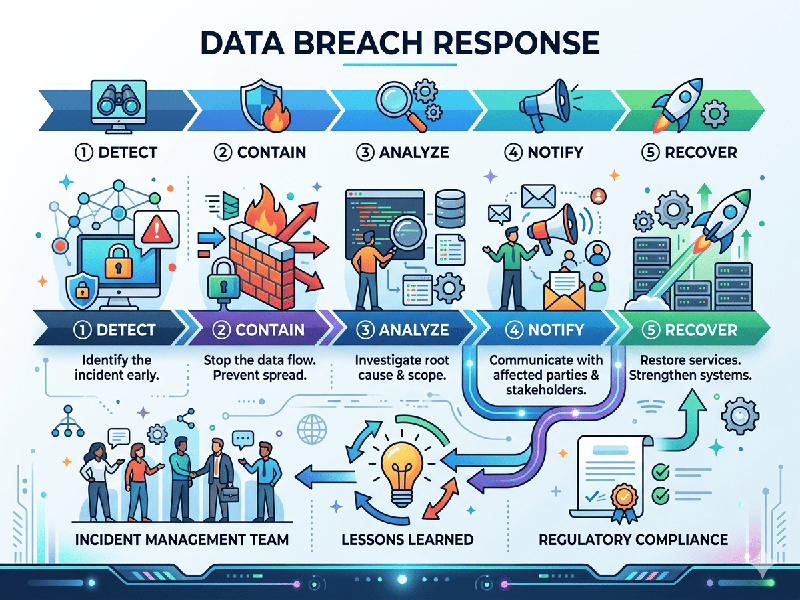
Data Breach Response
A data breach is a high-stakes event that requires a
disciplined, multi-layered response. When a breach occurs, the priority shifts
to containment, legal compliance, and rebuilding trust.
1. Immediate Containment & Assessment
The first 24 hours are critical for preventing further
data loss.
- Isolate Affected Systems: Disconnect breached servers
from the network without shutting them down (to preserve volatile memory
for forensics).
- Fix Vulnerabilities: Reset passwords for all
administrative accounts, rotate API keys, and patch the exploit used to
gain entry.
- Mobilize the Incident Response
Team (IRT):
Convene your IT, legal, PR, and management stakeholders to centralize
decision-making.
2. Forensic Investigation
Before notifying the public, you must understand the
"Who, What, and How."
- Scope: Determine what data was
accessed (e.g., PII, financial records, intellectual property).
- Persistence: Ensure the attacker hasn't left
"backdoors" or malware that could trigger a second wave of the
attack.
- Documentation: Maintain a strict log of every
action taken during the response for future legal or insurance claims.
3. Legal & Regulatory Compliance
Depending on your region and industry, you may have strict
windows for reporting.
- Notification Windows: Under regulations like the DPDP
Act (India) or GDPR (EU), authorities often require
notification within 72 hours.
- Law Enforcement: Report the incident to
cybercrime cells (such as CERT-In in India) to assist in the
investigation.
4. Communication Strategy
Transparent communication can mitigate long-term brand
damage.
- User Notification: Reach out to affected
individuals clearly. State what happened, what data was involved, and what
you are doing to protect them (e.g., offering credit monitoring services).
- Public Relations: Prepare a concise statement for
the media to prevent misinformation.