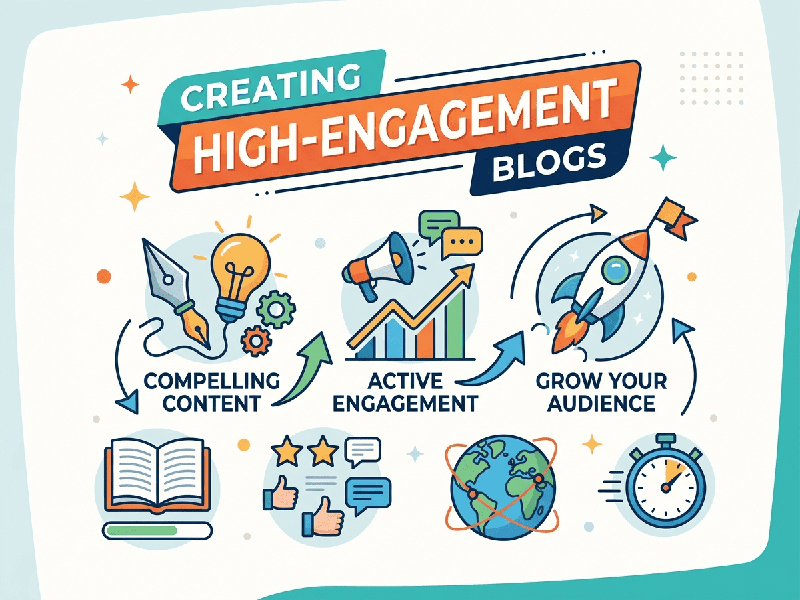
Creating High-Engagement Blogs
Creating High-Engagement Blogs involves combining strategic content
structure, audience psychology, SEO best practices, and interactive design to
capture attention, maximize dwell time, and drive user actions (shares,
comments, and conversions).
Core Anatomy of a High-Engagement Blog
Key Content & Formatting Strategies
- Magnetic Hooks & Headlines
o Use numbers, clear outcomes, or
curiosity gaps in titles (e.g., "7 Proven Ways to..." instead of
"How to...").
o Deliver the primary takeaway or
answer in the introductory paragraph before diving deep.
- Scannable Architecture (F-Shape
Pattern)
o Break walls of text into short, 2–3
sentence paragraphs.
o Utilize descriptive H2 and H3
subheadings alongside bold lead-in keywords for fast scanning.
o Embed bullet points, summary
callouts, and comparison tables to keep readers scrolling.
- Original Insights &
Information Gain
o Incorporate proprietary data,
real-world case studies, expert quotes, or unique frameworks that generic AI
generators cannot replicate.
o Address specific user pain points
rather than offering surface-level summaries.
- Interactive & Visual Assets
o Integrate diagrams, infographics,
embedded videos, or interactive calculators to break up text and increase dwell
time.
o Add clear contextual Call-to-Actions
(CTAs) midway and at the end of the post.
1.Audience Intent Research:Align content with exact user needs.
Identify high-intent keywords and analyze current
top-ranking pages. Map out what key questions readers are trying to answer.
2.Draft Content & Outline:Build for scannability and impact.
Outline using clear subheadings (H2/H3). Draft the
content emphasizing short paragraphs, bold key terms, and actionable steps.
3.Integrate Visuals & Interactive Anchors:Boost dwell time and visual interest.
Insert relevant infographics, embedded tools, or
visual comparisons to sustain reader interest through long-form sections.
4.Optimize On-Page SEO & CTAs:Drive search performance and
conversions.
Refine meta titles, internal links, image alt texts,
and place targeted CTAs (newsletter signups, resource downloads) strategically.