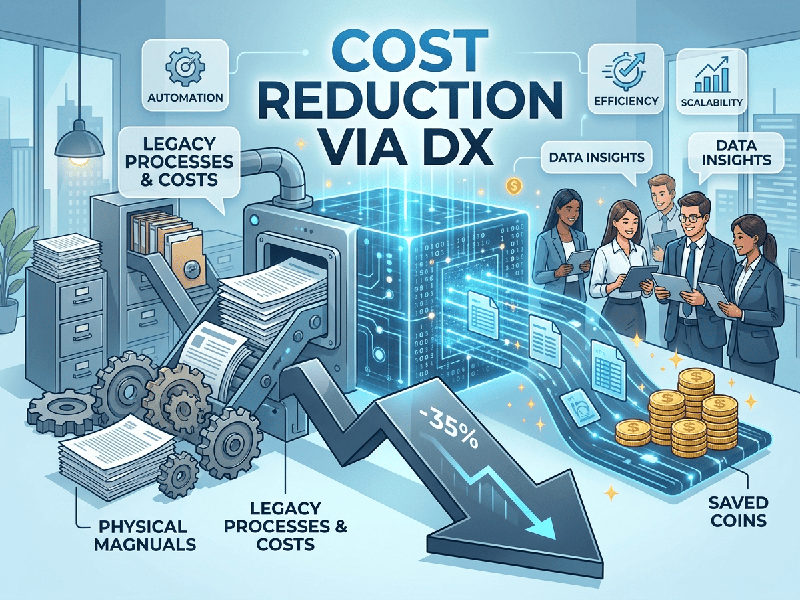
Cost Reduction via DX
Digital Transformation (DX) is no longer just about
modernization; it is a strategic lever for aggressive cost reduction. By
replacing legacy manual processes with automated, data-driven systems,
organizations can shift from "reactive" spending to
"optimized" operations.
1. Automation of High-Volume Tasks
The most immediate cost savings come from reducing the
"man-hour" cost of repetitive operations.
- Robotic Process Automation
(RPA):
Deploying bots to handle data entry, invoice processing, and payroll. This
reduces human error and allows staff to focus on higher-value strategy.
- AI-Driven Customer Support: Implementing advanced chatbots
and self-service portals. This can deflect up to 40–60% of routine
inquiries, significantly lowering the cost per ticket.
- Automated Workflow
Orchestration:
Using platforms to connect disparate software, ensuring data flows
automatically between Sales, Finance, and Fulfillment without manual
intervention.
2. Infrastructure & Cloud Optimization
Legacy hardware is expensive to maintain, power, and cool. DX
shifts these costs to a scalable model.
- Cloud Migration: Moving from on-premise servers
to a "Pay-as-you-go" model (AWS, GCP, or Azure). This converts
high Capital Expenditure (CapEx) into manageable Operating Expenditure
(OpEx).
- Serverless Computing: Only paying for the exact
millisecond a code script runs, rather than paying for a server to sit
idle.
- Energy Efficiency: Modern cloud data centers are
significantly more energy-efficient than private server rooms, reducing
the carbon footprint and utility costs simultaneously.
3. Data-Driven Operational Efficiency
DX provides the visibility needed to identify and "trim
the fat" from complex business cycles.
- Predictive Maintenance: In manufacturing or logistics,
using IoT sensors to predict when a machine will fail. Repairing a part before
it breaks is often 5x to 10x cheaper than an emergency shutdown.
- Supply Chain Visibility: Real-time tracking reduces
"buffer stock" (excess inventory held "just in case"),
freeing up working capital that was previously tied up in warehouses.
- Smart Procurement: AI tools can analyze thousands
of vendor contracts and market rates to suggest the most cost-effective
suppliers and optimal reorder points.