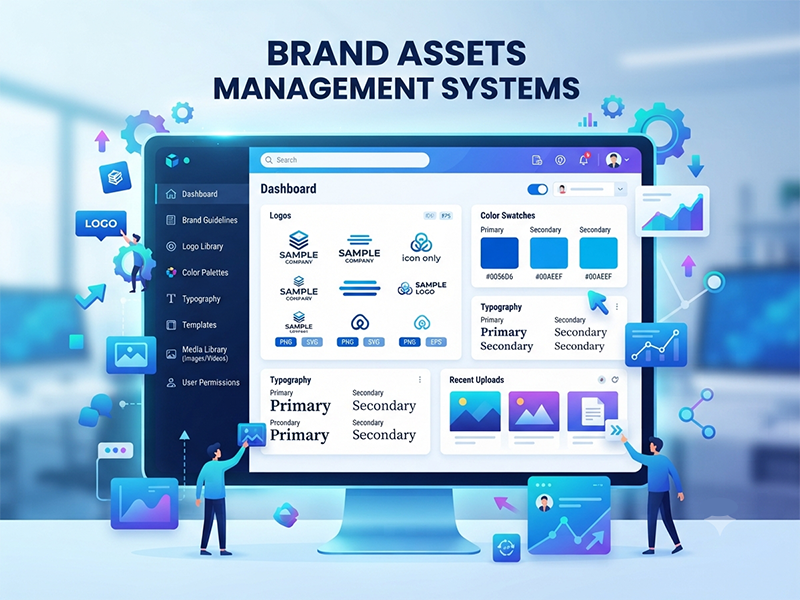
Brand Assets Management Systems
A Brand Assets Management (BAM) system—often
referred to as a Digital Asset Management (DAM) system with a strong
brand governance focus—is a centralized digital repository designed to store,
organize, manage, and distribute a company’s brand collateral. This includes
logos, typography guidelines, imagery, marketing templates, video files, and presentations,
ensuring brand consistency across all internal teams and external partners.
- Brand Consistency: Eliminates the use of outdated
logos, incorrect color codes, or unapproved messaging across global
channels.
- Streamlined Collaboration: Provides a single source of
truth, enabling marketing, design, and sales teams to easily find and
share approved assets without endless email chains.
- Controlled Access &
Permissions:
Secures proprietary files with role-based access control, ensuring
external vendors or freelance designers only see what they are authorized
to use.
- Usage Rights & Licensing: Tracks copyright expiration
dates, licensing agreements, and geographic usage rights to prevent costly
compliance penalties.
Core Features of a BAM System
1.
Advanced Metadata & Tagging: Automatically or manually tags assets with keywords,
categories, product codes, and campaign names for lightning-fast search
capabilities.
2.
Version Control: Automatically updates files so teams always access the latest approved
iteration while archiving older versions.
3.
Automated Formatting & Transformation: On-the-fly resizing, cropping, and
format conversion (e.g., converting a high-res master file into a web-optimized
JPEG or PNG) for different channels.
4.
Brand Portals & Guidelines: Integrated style guides and public or password-protected
sharing links that allow stakeholders to preview and download approved assets
instantly.
Popular Brand & Digital Asset Management Platforms
- Dedicated BAM/DAM Solutions: Tools like Bynder, Brandfolder,
Canto, and Cloudinary built specifically for marketing and
brand operations.
- Enterprise Ecosystems: Adobe Experience Manager (AEM)
Assets, which integrates seamlessly with creative tools like Photoshop and
Illustrator.
- Collaboration-Focused Options: Figma or Google Drive setups
enhanced with strict folder hierarchies, though lacking dedicated digital
rights management.