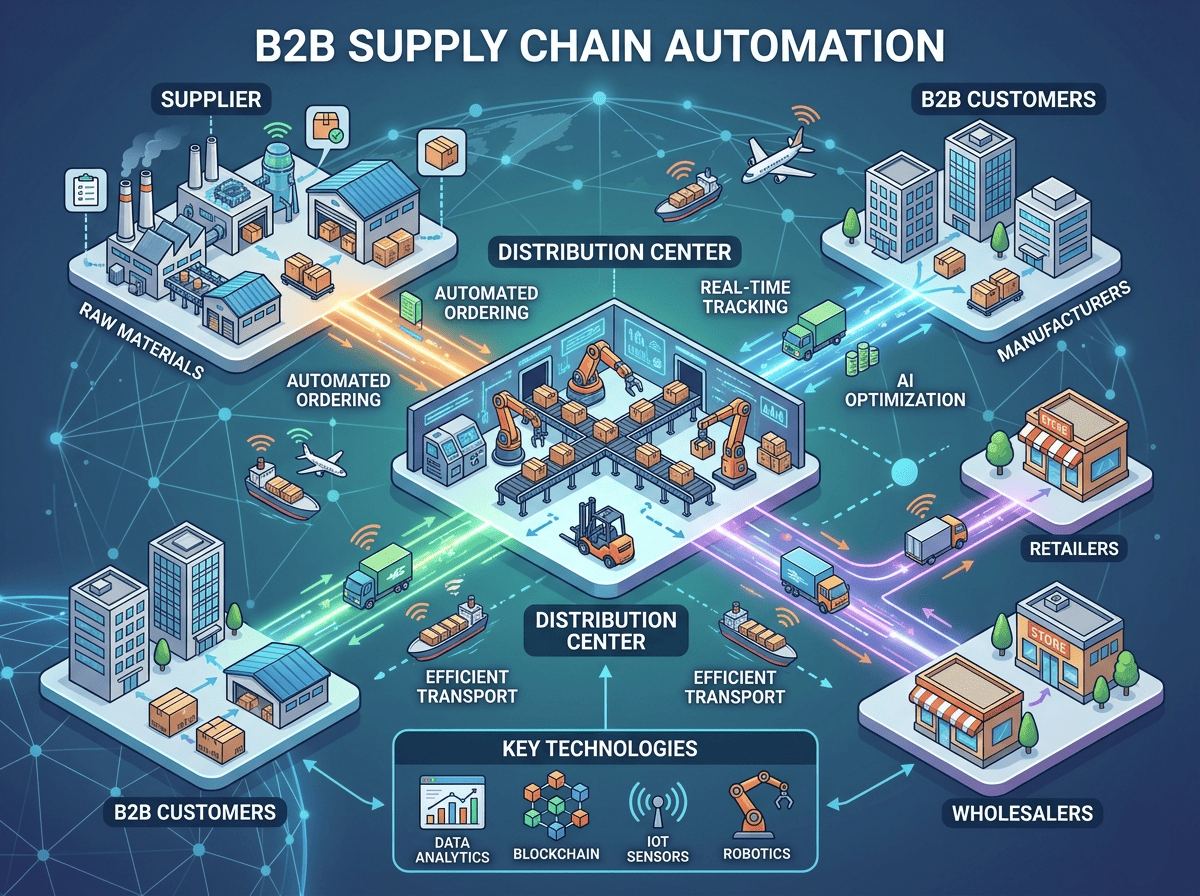
B2B Supply Chain Automation
B2B Supply Chain Automation in 2026 has moved beyond simple digital
record-keeping into a phase of autonomous orchestration. It is the
integration of AI, IoT, and blockchain to manage the flow of goods, data, and
finances between businesses with minimal human intervention.
1. Key Technologies Driving Automation in 2026
A. Agentic AI (The "Digital Coworker")
Instead of just providing dashboards, AI Agents now
act as autonomous team members.
- Role: A "Procurement Agent"
can automatically detect a low-stock level, identify the best supplier
based on real-time port congestion data, negotiate a price within set
guardrails, and issue a Purchase Order (PO) without a human clicking
"approve."
- Collaboration: Multiple agents (logistics,
finance, and demand planning) communicate with each other to solve
bottlenecks before they occur.
B. Blockchain & Smart Contracts
Blockchain provides an immutable single source of truth
for all partners in the chain.
- Smart Execution: When an IoT sensor confirms a
shipment has reached a specific GPS coordinate (e.g., an Indian exporter’s
cargo arriving at the Port of Rotterdam), a Smart Contract
automatically triggers the insurance payout or releases the bank payment.
- Trust: This reduces dispute resolution
times from weeks to seconds.
C. IoT & Digital Twins
- Digital Twins: Companies maintain a real-time
virtual map of their entire supply chain. If a factory in Vietnam slows
down, the "Twin" simulates the impact on US inventory and
suggests rerouting shipments instantly.
- Cold Chain Monitoring: IoT sensors monitor temperature
and humidity for perishables, automatically flagging "surgical
recalls" for only the specific affected batches rather than entire
shipments.