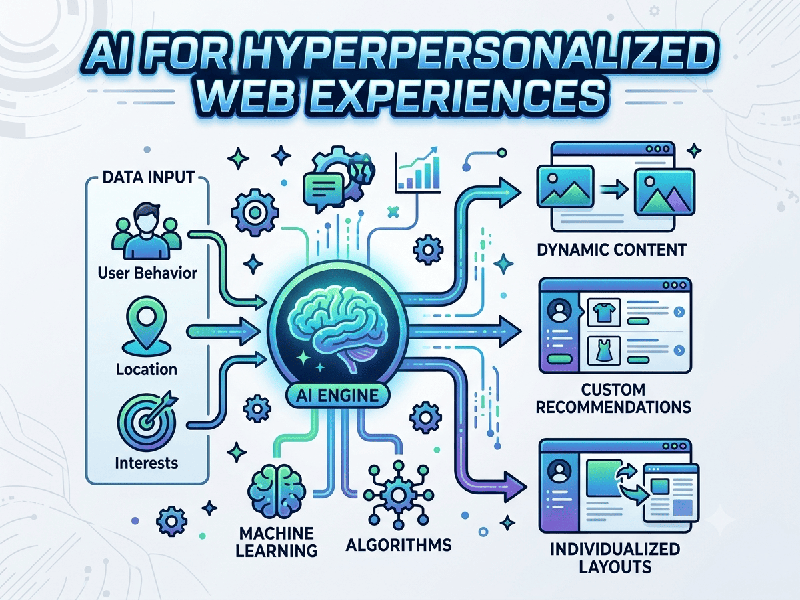
AI for Hyperpersonalized Web Experiences
AI for
Hyperpersonalized Web Experiences shifts web design from static, one-size-fits-all pages to
dynamic, real-time digital environments tailored to individual users.
Traditional personalization uses basic attributes (e.g., "Hello,
John" or recommended items based on past purchases). In contrast,
hyperpersonalization leverages AI, machine learning, and real-time behavioral
data to adapt every pixel, headline, product offering, and user flow on the
fly.
Core
Components of AI-Driven Hyperpersonalization
- Real-Time Data Streams: AI continuously processes
behavioral data (clicks, dwell time, navigation paths), contextual data
(location, local weather, device type, time of day), and historical data
(past purchases, support interactions).
- Predictive Analytics: Machine learning models analyze
real-time intent to anticipate what a visitor needs next, surfacing
relevant content or offers before the user actively searches for them.
- Adaptive UX Layouts: Generative AI dynamically
reorganizes landing page designs, changes calls-to-action (CTAs), and
tailors visual branding to match individual user personas.
- Dynamic Pricing Engines: Algorithms alter promotions,
discounts, or bundled packages in real time based on demand, user segment,
or customer lifetime value.
Core
Technologies & Popular Tools
- Content & Layout Engines: Dynamic Yield, Mutiny
- Predictive Personalization
Platforms:
Adobe Target, Salesforce Einstein
- Behavioral Analytics: FullStory, Hotjar AI
- Customer Data Platforms (CDPs): Segment, Tealsium (used to
aggregate real-time user profiles)
Implementation
Challenges
- Data Privacy & Compliance: Navigating regulations (GDPR,
CCPA) requires explicit user consent and robust data governance.
- Over-Personalization
("Creep Factor"): Adapting experiences too aggressively can make users
feel surveilled.
- Data Integration: Connecting disparate legacy
databases into unified, real-time pipelines remains complex.