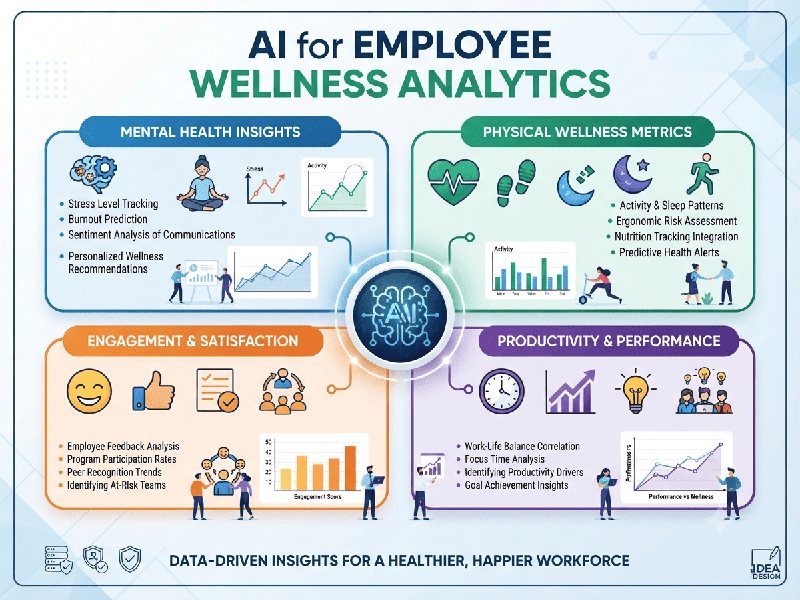
AI for Employee Wellness Analytics
AI-driven employee wellness analytics refers to the use of artificial
intelligence and machine learning to collect, process, and analyze workforce
health data. It moves corporate wellness away from generic, one-size-fits-all
programs toward predictive, highly personalized, and proactive strategies.
1. Key Components of AI Wellness Analytics
- Predictive Health Insights: Machine learning algorithms
evaluate aggregate data patterns to spot early warning signs of chronic
conditions, burnout, or mental health risks.
- Behavioral & Engagement
Tracking: AI
tracks how employees interact with wellness tools, mapping active hours,
communication frequency, or resource usage to see what benefits actually
work.
- Sentiment Analysis: Natural Language Processing
(NLP) tools can safely evaluate anonymized employee feedback, surveys, and
communication channels to measure team morale and stress levels.
- Real-Time Data Integration: Connects securely with wearable
tech or digital health platforms to deliver immediate, context-aware
suggestions (e.g., suggesting a screen break or stretch routine after
hours of desk work).
2. Benefits for Employees
- Hyper-Personalization: Tailors fitness, nutrition, and
mental health recommendations based on an individual's unique goals,
lifestyle, and preferences.
- 24/7 Virtual Support: AI chatbots and digital
concierges provide instant answers regarding health benefits, insurance
coverage, or stress-relief resources.
- Reduced Friction: Eliminates the frustration of
searching through complex company intranets to find the right wellness
program.
3. Benefits for Employers and HR Leaders
- Strategic Resource Allocation: Instead of guessing what
benefits employees want, HR can use data dashboards to invest only in
high-impact programs.
- Proactive Burnout Prevention: Identifies organizational
stress points (e.g., specific departments facing sustained pressure or
unusual spikes in late-night work activity) allowing managers to adjust
workloads.
- Demonstrable ROI: Tracks participation rates,
absenteeism trends, and healthcare cost savings to prove the tangible
return on investment of wellness initiatives.
4. Crucial Challenges to Keep in Mind
- Data Privacy and Trust: Employees must be confident
that their personal health metrics are anonymized and will not be used
negatively in performance evaluations.
- Ethical Guardrails: AI must focus on supportive
interventions rather than intrusive micromanagement or surveillance.