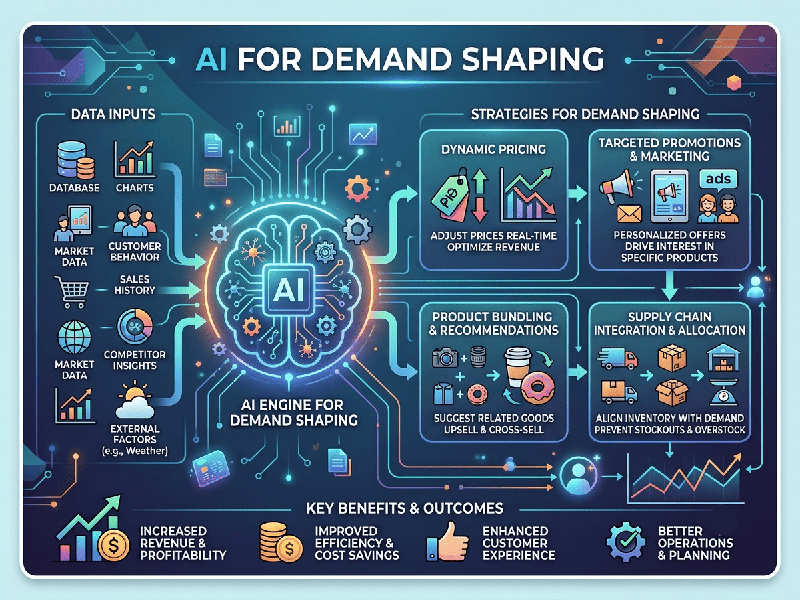
AI for Demand Shaping
AI for Demand Shaping refers to using artificial
intelligence and machine learning algorithms to proactively influence and
redirect consumer buying behavior to align demand with operational, inventory,
or financial constraints.
Unlike Demand Forecasting (which predicts what
will happen), demand shaping actively drives customer purchasing
decisions (what you want to happen) through strategic, real-time
interventions.
Core Mechanisms of AI Demand Shaping
- Dynamic Pricing & Discounts: Adjusts prices automatically
based on inventory levels, competitor pricing, and willingness-to-pay to
move excess stock or slow down sales of low-inventory items.
- Personalized Promotional
Targeting:
Delivers targeted ads, coupons, or email offers to specific customer
segments most likely to purchase high-inventory or higher-margin products.
- Algorithmic Recommendations: Uses recommendation engines on
e-commerce platforms to suggest alternative products when primary items
face supply chain delays or low stock.
- Product Bundling: Dynamically pairs slow-moving
SKUs with high-demand items at attractive prices to rebalance warehouse
inventory.
Demand Sensing vs. Demand Shaping
- Demand Sensing: AI ingests real-time external
data (POS transactions, social sentiment, weather, local events) to detect
rapid shifts in consumer interest.
- Demand Shaping: AI takes those sensed insights
and executes automated actions (pricing adjustments, targeted marketing
campaigns) to steer customer decisions in real time.