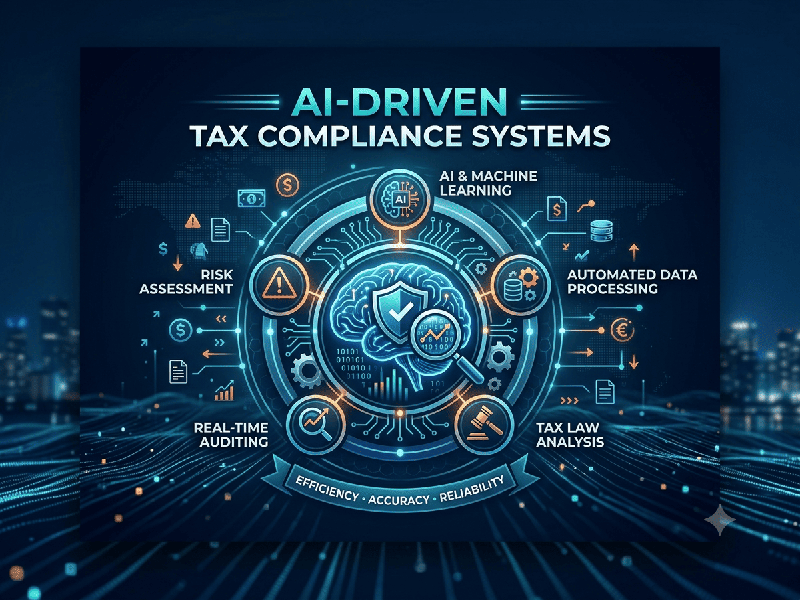
AI-Driven Tax Compliance Systems
AI-driven tax compliance systems represent a shift
from reactive, manual data entry to proactive, automated financial governance.
By integrating Artificial Intelligence (AI) and Machine Learning (ML) into tax
workflows, these systems do more than just calculate taxes—they interpret
complex, ever-changing regulations and identify financial risks in real-time.
Core Functional Pillars of AI Tax Systems
Modern tax compliance software generally relies on a
combination of four foundational technologies:
- Machine Learning (ML): Identifies patterns in
historical transaction data to predict future tax liabilities and flag
deviations from industry norms.
- Natural Language Processing
(NLP): Parses
thousands of pages of evolving tax legislation to keep your system updated
with the latest compliance requirements.
- Robotic Process Automation
(RPA): Handles
repetitive tasks like extracting data from invoices or populating tax
forms from multiple accounting sources.
- Anomaly Detection: Continuously scans for
irregularities (e.g., duplicate entries, mismatched reporting) that may
trigger an audit.
Why Organizations are Adopting AI Tax Strategies
1.
Reduced Manual Labor: Automation of routine document handling and data entry allows tax
professionals to pivot from "number crunching" to high-value
strategic advisory roles.
2.
Increased Precision: AI drastically lowers error rates in form population and complex
multi-jurisdictional tax calculations, mitigating the risk of penalties.
3.
Proactive Trust: Real-time data validation helps businesses establish a reputation of
reliability and transparency with tax authorities, often reducing the frequency
of intrusive audits.
4.
Scalability:
As businesses grow and expand into new states or countries, AI systems can
adapt to new regulatory frameworks without requiring a linear increase in
headcount.
Critical Considerations for Implementation
- Fiduciary-Grade Data: Not all AI is created equal.
For tax work, prioritize platforms trained on verified, authoritative
primary sources rather than general-purpose LLMs that might
"hallucinate" tax advice.
- Data Hygiene: AI performance is strictly tied
to data quality. Consolidate your transaction data, payment logs, and
shipment info into standardized, clean formats before attempting full
integration.
- Human-in-the-Loop: While AI can draft memos,
summarize legislation, and flag risks, professional human judgment remains
essential for interpreting nuance and handling unique edge cases.
Governance Framework: Establish a clear policy for how AI tools are used, who has access to them, and how outputs are verified.