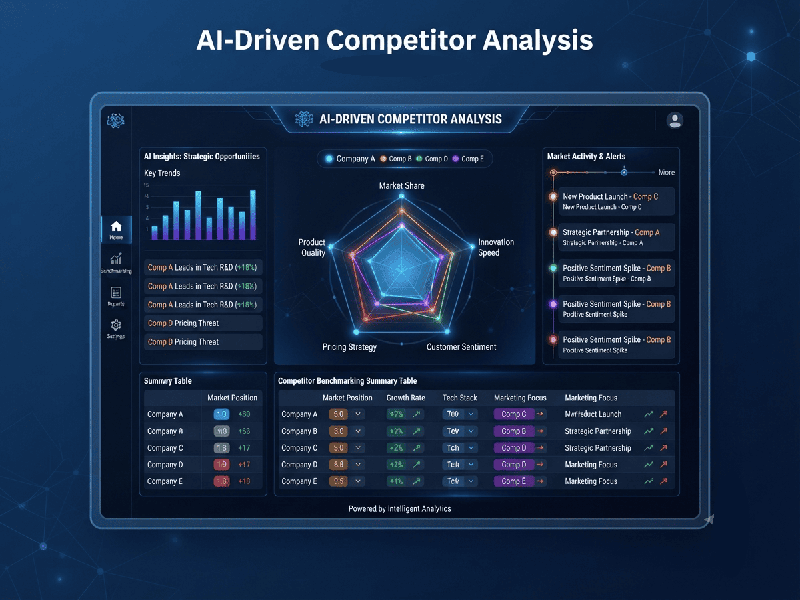
AI-Driven Competitor Analysis
AI-driven competitor analysis has moved beyond manual
data entry and static snapshots. In 2026, the strategy centers on continuous
monitoring, pattern recognition, and real-time intelligence to inform
decision-making.
The AI-Driven Framework
To move from reactive to proactive, consider this
six-step implementation framework:
1.
Expand the Competitive Set: Don't limit yourself to direct competitors. Include indirect
competitors (different solution, same problem) and even defunct companies to
study their past mistakes.
2.
Define a Clear Framework: Standardize your analysis parameters. Key focus areas should
include Ad Creatives, Tech Stacks, Hiring Signals (LinkedIn), Customer
Sentiment (G2/Trustpilot), and Pricing Shifts.
3.
Automate Data Collection: Use automation tools (e.g., n8n, Firecrawl) to scrape and
aggregate data nightly. This ensures your intelligence is always fresh.
4.
Surface Patterns with AI: Feed the aggregated raw data into an LLM with a specific
persona prompt: "Act as a business analyst. Review these competitor
activities and summarize key patterns, strategic shifts, and untapped
opportunities."
5.
Configure Instant Alerts: Use tools like Visualping or native integrations in
platforms like Semrush to receive alerts the moment a competitor changes their
pricing, launches a feature, or shifts messaging.
6.
Embed into Workflow: Competitive intelligence must be actionable. Share the top three
competitor moves in weekly standups and integrate findings directly into
campaign planning.
Practical
Implementation Tips
- Optimize for AI Search: As AI engines (Google AI
Overviews, ChatGPT, Perplexity) become primary search tools, use SEO tools
(like RanksPro) to track if your competitors are being cited in
AI-generated summaries.
- Human-in-the-Loop: Automate the collection, but
always "gut-check" AI recommendations. AI is excellent at
pattern recognition but lacks the nuanced understanding of your brand’s
unique positioning or long-term strategy.
- Start Small: If you are budget-conscious,
begin by using ChatGPT/Claude to summarize competitor press releases and
annual reports, or use free tools like Google Alerts to set a baseline
monitoring rhythm.