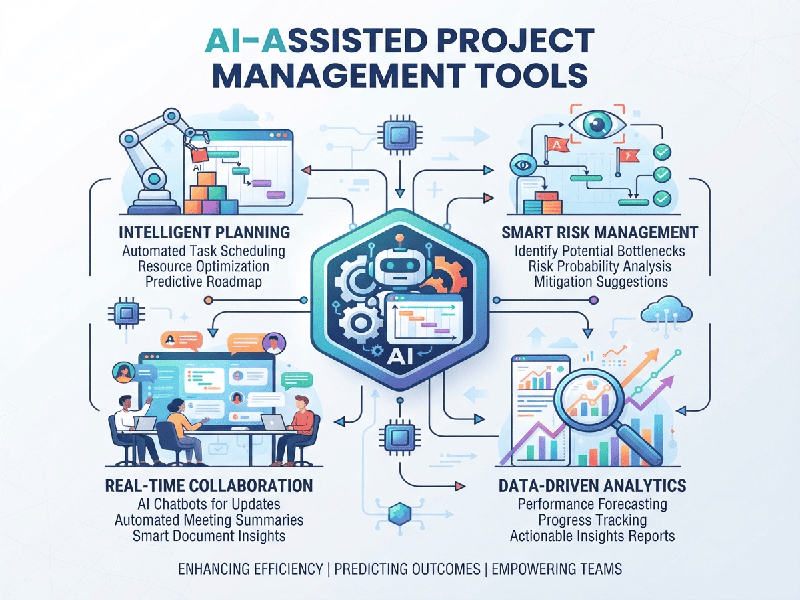
AI-Assisted Project Management Tools
AI-assisted project management tools leverage machine
learning, natural language processing, and automation to streamline workflows,
predict project risks, and reduce manual administrative overhead. By
integrating intelligent features into everyday tasks, these platforms help
teams deliver projects faster and with greater accuracy.
Key Capabilities & Features
Modern project management platforms incorporate AI
across several core functions:
- Automated Scheduling &
Timeline Optimization: AI algorithms analyze historical project data and team velocity to
automatically generate realistic project timelines, adjust schedules
dynamically when bottlenecks occur, and forecast completion dates.
- Predictive Risk Assessment: Machine learning models
identify potential roadblocks, resource shortages, or deadline slippages
before they impact the project, enabling proactive mitigation.
- Smart Task Allocation &
Workload Balancing: Tools evaluate team member capacity, historical performance, and
specific skill sets to assign tasks efficiently and prevent team burnout.
- Natural Language Processing
(NLP) & Meeting Intelligence: AI assistants automatically transcribe meetings,
extract actionable insights, assign action items, and update project
boards via chat commands or voice inputs.
- Automated Reporting &
Analytics:
Generative AI aggregates status updates across multiple work streams to
produce concise executive summaries and real-time dashboard
visualizations.
Selection Criteria for Implementation
When evaluating AI tools for an organization, consider
the following factors:
1.
Data Security & Privacy: Ensure the platform complies with industry standards (e.g.,
GDPR, SOC 2) and that internal proprietary data is not used to train public
models.
2.
Integration Ecosystem: The tool should seamlessly connect with existing software
stacks, including cloud storage, communication apps (e.g., Slack, Microsoft
Teams), and CRM systems.
3.
Adoption Curve:
Look for intuitive interfaces and natural language interaction models to
minimize the learning curve for team members.