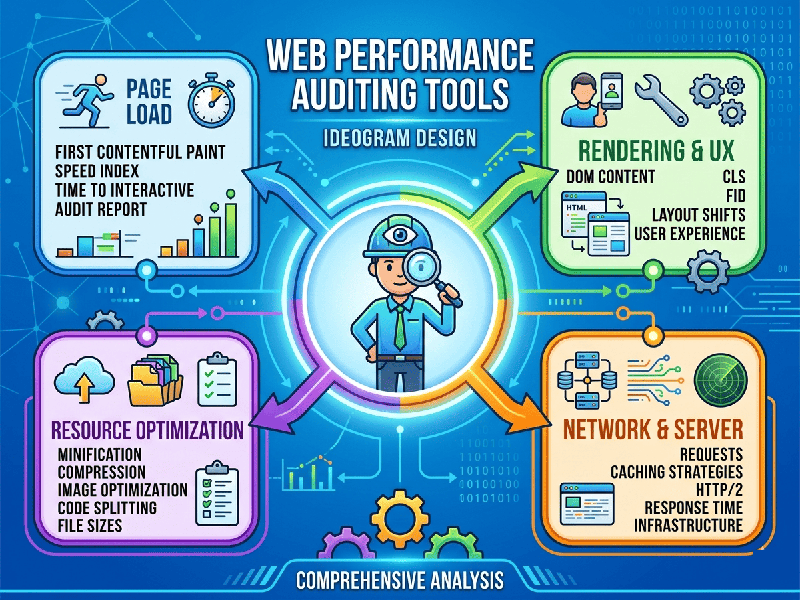
Web Performance Auditing Tools
When we talk about web performance auditing tools, we are
looking at the engines that measure speed, responsiveness, and how efficiently
your code delivers content to a user's screen.
Optimizing these metrics directly impacts user retention and
search rankings—especially regarding metrics like Core Web Vitals, which
track actual user experience.
1. Technical Crawlers (Site-Wide Performance &
Architecture):
If you need to analyze how performance issues scale across
hundreds or thousands of pages at once rather than testing one URL at a time,
you need a crawler.Screaming Frog SEO Spider: A powerful desktop-based
application. While heavily used for technical SEO (checking page titles,
missing meta descriptions, and duplicate content), it connects directly to
PageSpeed Insights via API. This allows you to bulk-audit the response times
and Core Web Vitals of every single URL on a domain at once. Sitebulb: A desktop crawler that excels at
data visualization. It takes complex performance crawl data and builds clear,
structured maps showing how code bloat or heavy assets are impacting your
site’s architecture.
2. Continuous Monitoring & Synthesis:
Performance
fluctuates based on server loads, traffic, and code deployments. These
platforms continuously track performance over time. Google Search Console
(GSC): Essential for ongoing tracking. Its dedicated Core Web Vitals report
tracks how actual mobile and desktop users experience your site over a rolling
period, flagging batches of slow URLs.Ahrefs / Semrush Site Audits: Both premium
suites feature "always-on" auditing capabilities. They crawl your
site on a schedule to catch sudden performance drops, broken internal assets,
or bloated JavaScript files before they hurt your traffic.