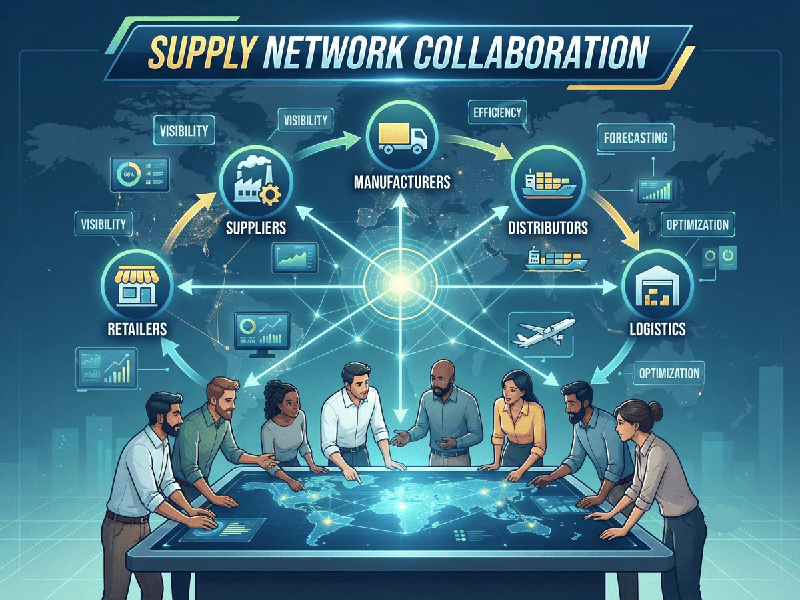
Supply Network Collaboration
Supply Network Collaboration is a strategic business practice
where multiple autonomous entities—such as suppliers, manufacturers,
distributors, and customers—work together to plan, execute, and optimize supply
chain operations.
Rather than operating as isolated silos, participants
in a collaborative network integrate their systems and processes to create a
synchronized ecosystem. The goal is to move from a traditional, reactive supply
chain to a dynamic, proactive value chain.
Core Components
- Data Integration: Real-time or near-real-time
sharing of critical information, such as demand forecasts, inventory
levels, production schedules, and delivery status.
- Aligned Objectives: All stakeholders work toward
shared goals, such as cost reduction, improved service levels, or
sustainability targets.
Strategies for Success
- Break Down Silos: Centralize data into a shared
system that is accessible to all relevant stakeholders.
- Foster Trust: Build long-term, transparent
partnerships rather than focusing solely on short-term, transactional
deals.
- Standardize Communication: Agree on shared terminology,
metrics (KPIs), and reporting formats to ensure all parties are aligned.
- Leverage Technology: Utilize Supplier Relationship
Management (SRM) or supply chain visibility platforms to enable seamless
data exchange and performance tracking.
- Technology Enablement: The use of cloud-based
platforms, ERP/SCM systems, and AI/IoT tools to provide end-to-end
visibility and automate workflows.
- Joint Problem-Solving: A proactive approach to
identifying bottlenecks and responding to disruptions (e.g., material
shortages or demand spikes) collectively.