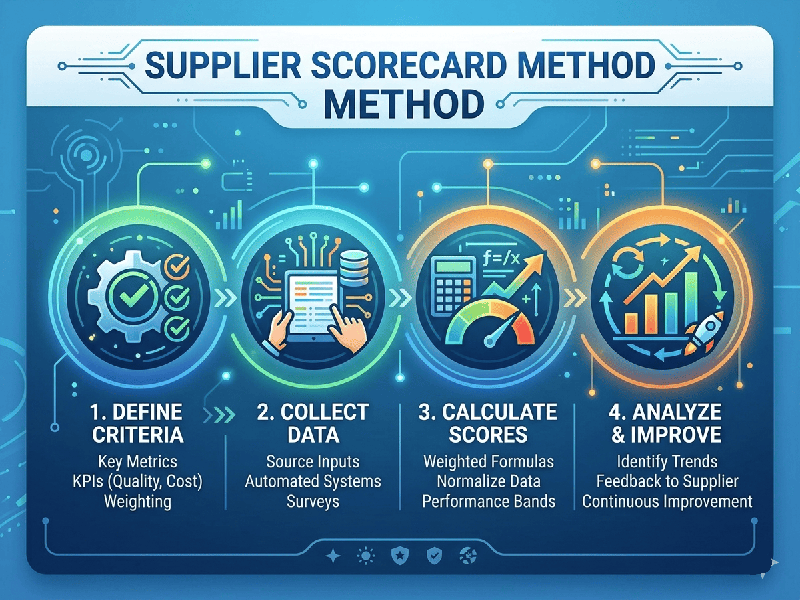
Supplier Scorecard Method
A Supplier Scorecard is a powerful tool used by
procurement and supply chain professionals to track, measure, and evaluate the
performance of their vendors. It transforms subjective opinions into objective
data, helping businesses decide which partnerships to grow and which need
improvement.
1. Core Evaluation Metrics (The KPIs)
A standard scorecard typically evaluates four to five key
"buckets" of performance:
- Quality: Defect rates, percentage of
items meeting specifications, and the number of returns or RMAs.
- Delivery: On-time delivery (OTD)
percentage, lead time accuracy, and shipping completeness.
- Cost: Price competitiveness,
stability of pricing over time, and willingness to offer volume discounts.
- Service & Responsiveness: Speed of communication,
technical support quality, and ease of dispute resolution.
- Compliance: Adherence to ISO standards,
ethical labor practices, and environmental certifications (e.g., CE, FDA).
2. Performance Grading (The "Traffic Light" System)
Once you have the final score, suppliers are usually
categorized to determine the next steps:
- Platinum/Gold (90–100%): Strategic partners; eligible
for more business and long-term contracts.
- Silver/Green (70–89%): Reliable suppliers; performing
as expected but with minor room for improvement.
- Bronze/Yellow (50–69%): Underperforming; requires a Corrective
Action Plan (CAP) and frequent monitoring.
- Red (Below 50%): High risk; consider termination
or finding an alternative source immediately.
3. Benefits of the Method
- Objectivity: Removes emotional bias from
procurement decisions.
- Continuous Improvement: Provides vendors with clear,
data-backed feedback so they know exactly where to improve.
- Risk Mitigation: Identifies weak links in the
supply chain before they cause a production shutdown or quality crisis.
- Better Negotiation: Data gives you more leverage
when discussing contract renewals or price adjustments.