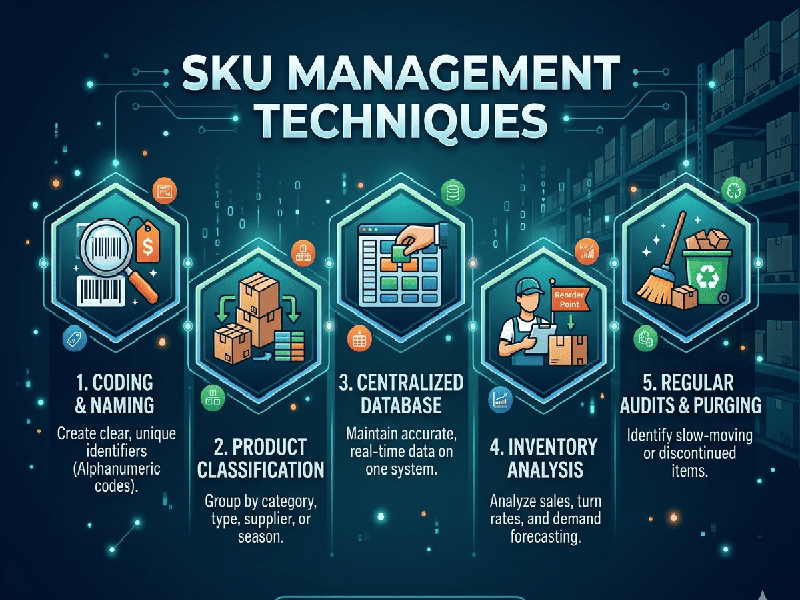
SKU Management Techniques
Effective Stock Keeping Unit (SKU) Management is the
backbone of a streamlined supply chain. It involves the systematic tracking,
categorizing, and analysis of inventory to ensure that capital is not tied up
in stagnant goods while high-demand items remain available.
1. The ABC Analysis (Prioritization)
This technique categorizes SKUs based on their value and
turnover rate, helping you decide where to focus your attention.
- Category A: High-value items with low sales
frequency or high-turnover items. These require tight control and frequent
reordering.
- Category B: Moderate value and moderate
sales frequency.
- Category C: Low-value items that sell in
high volumes or very slowly. These require the least financial oversight.
2. Setting Intelligent Reorder Points
Instead of guessing when to buy more, calculate a specific threshold for every SKU using this formula:
This ensures you account for the time it takes for a supplier
to deliver new stock before you actually run out.
3. SKU Rationalization (The "Trim")
Regularly audit your catalog to identify "Slow-Movers"
or "Dead Stock." SKU rationalization involves:
- Discontinuing products that cost
more to store than they earn in profit.
- Identifying
"cannibalization," where two similar SKUs are competing for the
same customer and splitting your resources.
4. Cross-Docking & Just-in-Time (JIT)
To minimize storage costs, these techniques focus on moving
SKUs quickly:
- Cross-Docking: Unloading incoming SKUs from a
supplier and loading them directly onto outbound trucks with little to no
storage time.
- JIT: Coordinating with suppliers so
that SKUs arrive exactly when they are needed for production or shipping,
reducing warehouse overhead.
5. Automated Tracking & Integrated SEO
In modern digital marketplaces, SKU management must be
integrated with your sales platforms.
- Unique Identifiers: Ensure every SKU has a distinct
alphanumeric code that describes its traits.
- Real-time Visibility: Use cloud-based systems that
update inventory counts across B2B directories and e-commerce storefronts
simultaneously to prevent overselling.