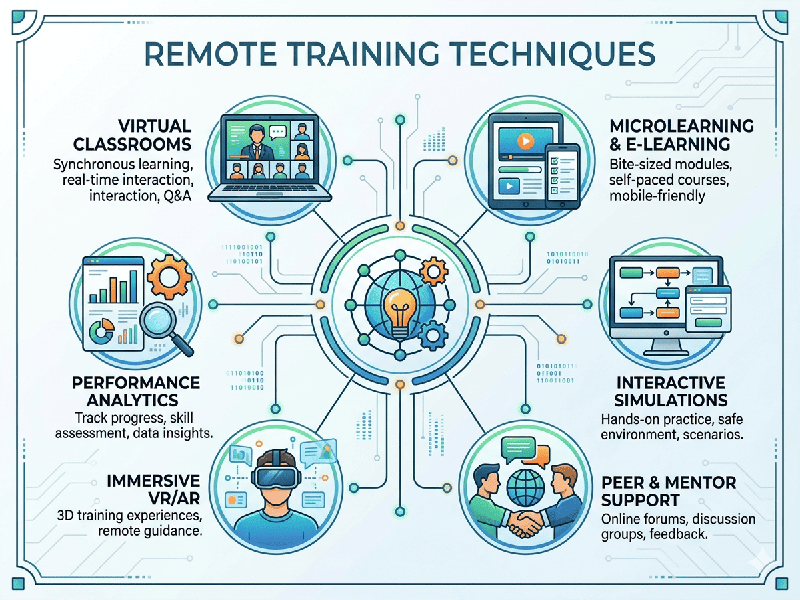
Remote Training Techniques
Remote training in 2026 has transitioned from simple video calls to immersive, data-driven ecosystems. To maximize ROI, organizations must choose between high-engagement interactive models or highly scalable asynchronous systems.
The "Synchronous Engagement" Approach
Best for: Leadership development, soft skills, and complex collaborative
problem-solving.
This method focuses on real-time interaction,
mimicking the energy of an in-person workshop but utilizing digital tools to
enhance participation.
- Virtual Breakout Sprints: Instead of long lectures,
trainers use 15-minute "micro-sprints" where small teams enter
breakout rooms to solve a specific challenge using digital whiteboards
(like Miro or FigJam).
- Gamified Live Polling: Instructors use real-time
"battle" modes or leaderboards to test knowledge mid-session,
turning passive listening into active competition.
- Immersive Simulations (VR/AR): High-stakes training—such as
safety protocols or difficult client negotiations—is conducted in virtual
reality, allowing employees to practice in a "fail-safe"
environment that feels physically real.
- Live Feedback Loops: Utilizing AI to monitor "engagement heatmaps," trainers can see in real-time if the audience is losing focus and pivot the delivery style immediately.