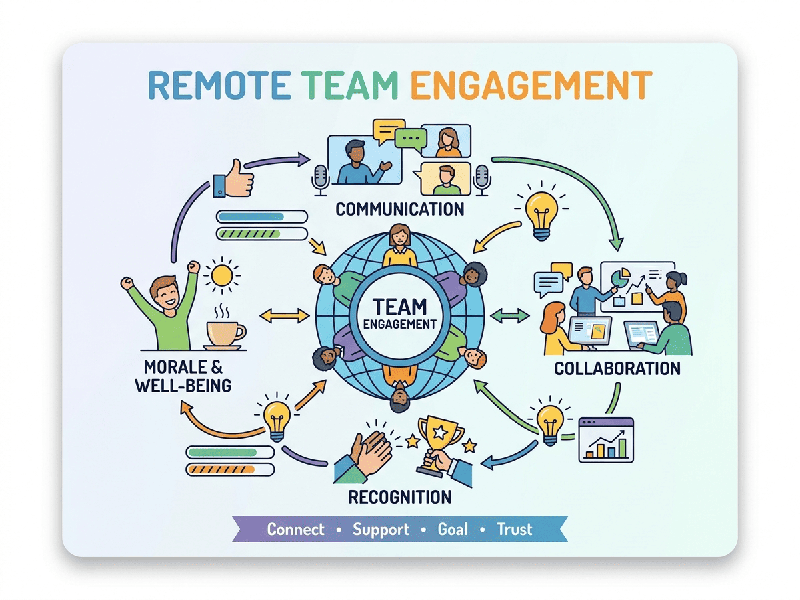
Remote Team Engagement
Keeping a
remote team engaged requires moving beyond standard video calls and focusing on
asynchronous trust, social connection, and clear growth paths.
1. The
"Social Glue" Strategies
Remote work
often lacks the "watercooler" moments that build empathy. You have to
create these intentionally.
- Virtual Coffee Chats: Use tools like Donut to
randomly pair team members for 15-minute non-work chats.
- The "Wins" Channel: Create a dedicated Slack or
Teams channel specifically for shouting out small victories or
peer-to-peer recognition.
- Shared Experiences: Instead of awkward "Happy
Hours," try structured activities like online escape rooms, trivia,
or even a remote "Show and Tell" where people share a hobby or a
corner of their home office.
2.
Communication & Workflow
Engagement
drops when people feel confused or micromanaged.
- Default to Asynchronous: Reduce meeting fatigue by using
recorded screen shares (like Loom) for project updates. Save live meetings
for brainstorming and complex problem-solving.
- The "Open Door"
Policy: Set
"Office Hours" where leaders stay on a video link for an hour,
allowing anyone to drop in for a quick question or a casual chat.
- Clear Documentation: Ensure every project has a
"Single Source of Truth." When people know where to find
information, they feel more empowered and less frustrated.
3.
Wellbeing & Personal Growth
- Focus on Output, Not Hours: Shift the culture from
"green light status" to "milestone completion." This
gives the team the autonomy they crave.
- Professional Development: Remote workers often fear being
"out of sight, out of mind" for promotions. Schedule monthly
1-on-1s that focus strictly on career goals, not daily tasks.
- Digital Wellness Days: Encourage "No Meeting
Fridays" or specific blocks of time dedicated to deep, uninterrupted
work.