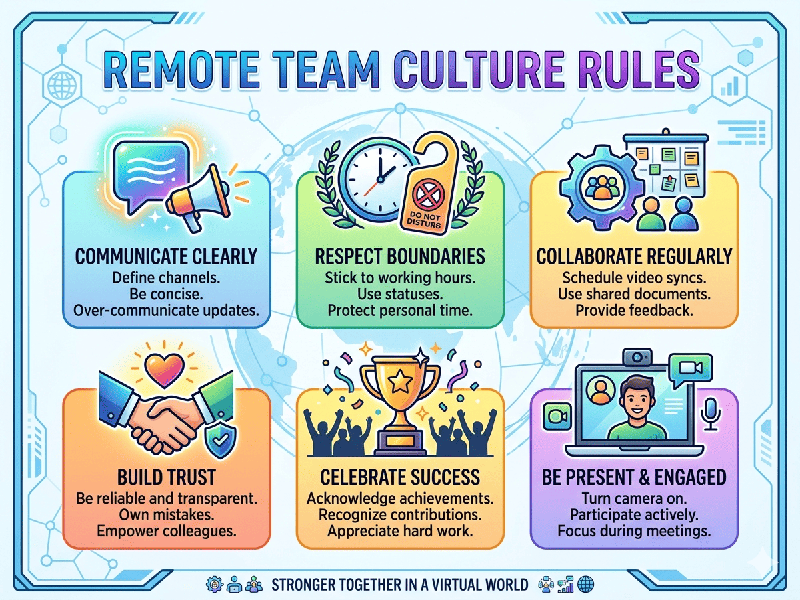
Remote Team Culture Rules
Building a high-performing remote culture requires moving
away from "office-first" thinking and embracing intentional
communication. Without the physical hallway, the culture lives entirely in
how you document, meet, and respect boundaries.
1. The Communication Stack
In a remote environment, clarity is more important than
charisma.
- Default to Asynchronous: Treat meetings as a last
resort. Use shared docs, project boards, and recorded loom videos for
updates. This respects deep work and different time zones.
- The "24-Hour" Rule: Set clear expectations for
response times. For example: Slack/Teams messages within 4 hours; Emails
within 24 hours.
- Over-Communication is Necessary: Since body language is missing,
be explicit about your status. "I’m stepping away for lunch" or
"Focusing on [Task] for 2 hours" prevents "presence
anxiety."
2. Meeting & Collaboration Protocols
Remote fatigue is real. These rules keep the team energized.
- No Agenda, No Meeting: If the goal isn't defined in
the calendar invite, the meeting shouldn't happen.
- Camera-On for Connection: While
"camera-optional" is good for focus, keep cameras on for 1-on-1s
and social hangouts to maintain human connection.
- The "Silent" Start: For complex brainstorming,
start meetings with 5–10 minutes of silent reading/writing in a shared
doc. This levels the playing field for introverts.
3. Social Connectivity & Rituals
Culture is the "social glue" that keeps people from
feeling like just another screen.
- Virtual
"Watercoolers": Dedicate specific channels for non-work chat (e.g.,
#pets, #foodie, #gaming) to replace office banter.
- Micro-Recognition: Publicly celebrate wins in a
dedicated #kudos channel. Recognition should be frequent and specific.
- Coffee Roulettes: Use automated tools to pair
random team members for a 15-minute "coffee chat" once a week to
prevent departmental silos.