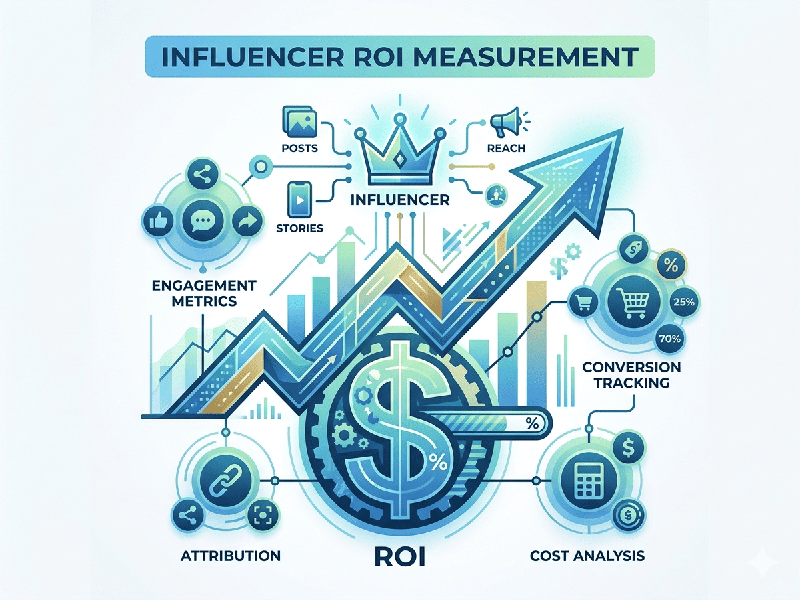
Influencer ROI Measurement
Measuring ROI for influencer campaigns in 2026 has shifted
from tracking "vanity metrics" (likes and followers) to a rigorous,
data-driven science. Below are two distinct ways to measure ROI, depending on
whether you are looking for immediate performance or long-term brand equity.
The Performance Marketing Approach
Best for: E-commerce, direct-to-consumer (DTC) brands, and immediate sales goals.
This method treats influencers like a paid media channel,
focusing on hard conversions and bottom-line revenue.
- Custom Tracking Links &
Promo Codes:
Assign each influencer a unique UTM-tracked URL and a specific discount
code. This provides a direct line from their post to your checkout page.
- Cost Per Acquisition (CPA): Calculate exactly how much you
paid the influencer divided by the number of sales they generated.
Formula: $CPA = \frac{\text{Total Influencer Fee}}{\text{Number of Conversions}}$
- ROAS (Return on Ad Spend): Measure the total revenue
generated against the cost of the partnership. In 2026, the average
benchmark for a successful campaign is $5.78 for every $1 spent.
- Affiliate Models: Moving toward performance-based
pay where influencers earn a percentage of the sales they drive, ensuring
the ROI is baked into the contract.