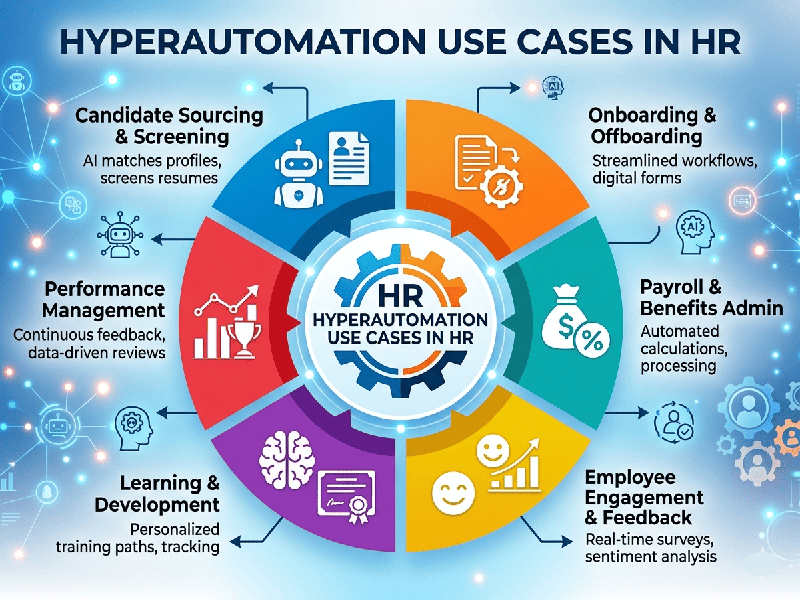
Hyperautomation Use Cases in HR
Hyperautomation involves the strategic integration of
multiple technologies—such as Artificial Intelligence (AI), Machine Learning
(ML), and Robotic Process Automation (RPA)—to automate as many business
processes as possible. In HR, this transforms the department from a
transactional hub into a strategic powerhouse.
1. Talent Acquisition & Recruitment
Hyperautomation streamlines the journey from job posting to
the final offer, reducing time-to-hire significantly.
- Resume Screening: AI algorithms parse thousands
of resumes to identify the best-fit candidates based on skills and
sentiment, rather than just keywords.
- Interview Scheduling: Automated bots sync with
recruiter calendars to propose times to candidates, handling all
back-and-forth communication.
- Predictive Analytics: Using historical data to
predict which candidates are most likely to succeed in the company
culture.
2. Employee Onboarding
Instead of a week of paperwork, hyperautomation creates a
seamless "Day One" experience.
- Document Processing: OCR (Optical Character
Recognition) automatically extracts data from IDs and tax forms to
populate payroll systems.
- Provisioning: RPA triggers the automatic
creation of email accounts, Slack profiles, and access to specific
software tools the moment a contract is signed.
- Virtual Assistants: AI chatbots guide new hires
through company policies and answer FAQs in real-time.
3. Payroll and Benefits Administration
This is often the most error-prone area of HR, where
hyperautomation ensures 100% accuracy.
- Expense Management: Automated validation of
receipts against company policy, with immediate reimbursement triggers for
approved items.
- Tax Compliance: Bots monitor changing regional
tax laws and automatically update payroll calculations to ensure
compliance.
- Benefits Enrollment: ML models can suggest the most
cost-effective health plans to employees based on their historical usage
and family needs.
4. Performance Management & Retention
Hyperautomation moves performance reviews from once-a-year
events to continuous, data-driven insights.
- Sentiment Analysis: AI analyzes employee feedback
and internal communication (anonymously) to gauge morale and predict
"flight risks" before they resign.
- Skill Gap Analysis: Automated systems compare
employee performance data against future business needs to recommend
personalized training modules.
- Continuous Feedback: Bots can prompt managers for
"micro-feedback" after project completions, ensuring data is
captured in the moment.
5. Employee Self-Service (ESS)
Reducing the burden on HR staff for routine inquiries.
- 24/7 Support: AI-powered helpdesks resolve
issues regarding leave balances, policy clarifications, and salary slips
without human intervention.
- Workflow Triggers: If an employee requests
maternity/paternity leave, the system automatically notifies the team,
adjusts the payroll cycle, and starts the temporary resource planning
process.